Glue traps, also called glue boards, have a long history in pest control. These boards offer specific benefits while also raising concerns that require careful balance.
History of Glue Boards
Pest control glue traps, and similar sticky boards, have existed in one form or another for decades, and likely much longer. One familiar example is fly paper. For generations, people purchased coiled strips of sticky paper, pulled them out of their small cylinders, and hung them in homes or barns to catch nuisance flies. As flies landed and became stuck, they lured other flies to join the cluster. Flies attracted flies to “chat and flirt”, increasing the trap’s effectiveness.
The concept of these basic glue boards, using a sticky substance to capture animals or insects, is even reflected in nature and prehistory. Certain carnivorous plants grow sticky hairs that trap insects, which are later digested by the plants. Spiders lure insects to their webs of sticky threads.
Amber – fossilized tree resin often used in jewelry – has preserved insects and other small creatures that were trapped long ago. Large, ancient natural tar deposits, such as the La Brea Tar Pits in Los Angeles, have trapped both large and small animals over tens of thousands of years.
Modern Glue Traps
In modern times, people use various gels or sticky barriers, such as lines of tacky material that ants cannot cross, continuing the longstanding practice of using adhesive substances to manage pests.

Benefits of Glue Traps
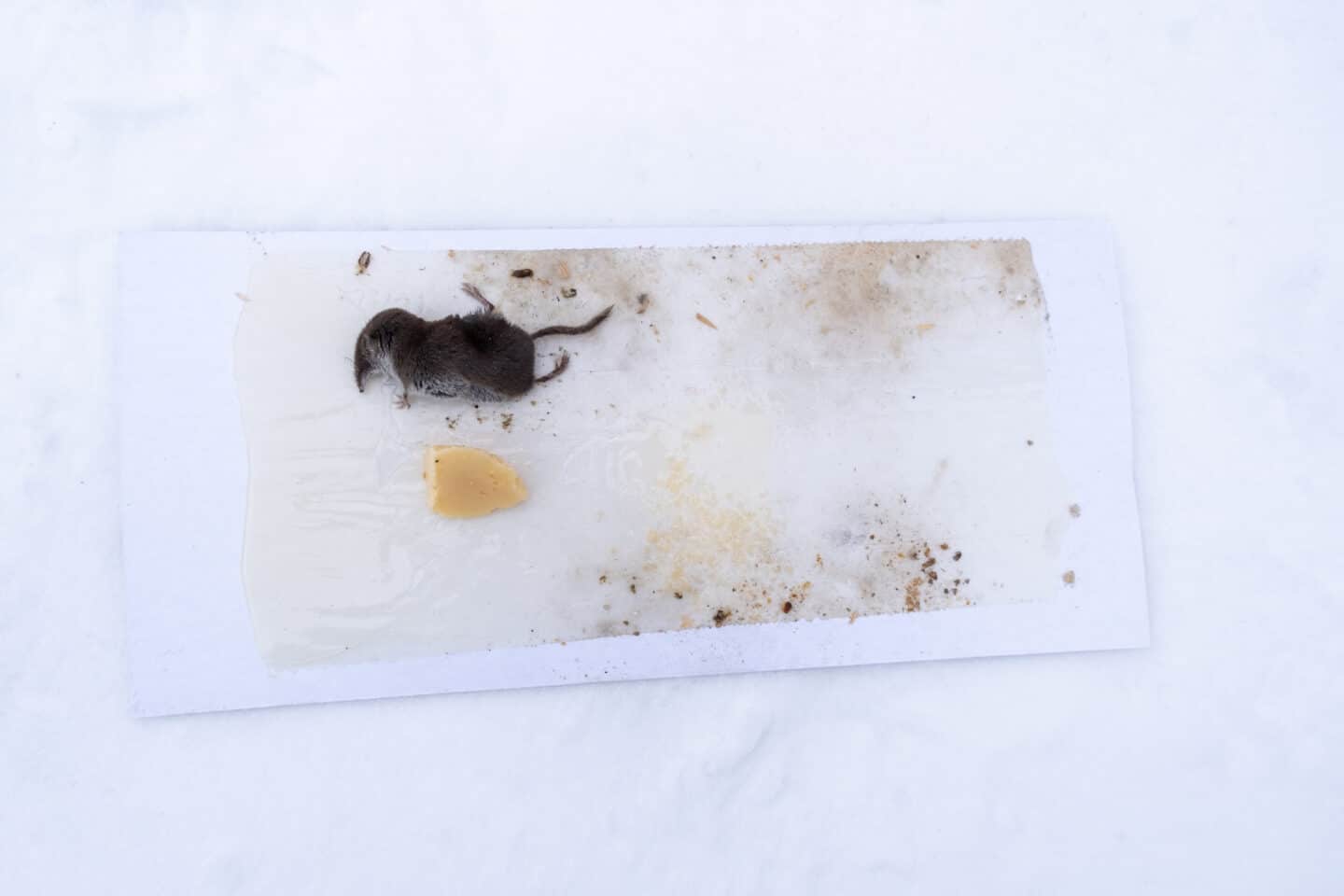
Today, the term glue traps (or glue board) usually refers to a non-hardening, sticky-surfaced device used to catch insects or rodents, including mice and sometimes rats.
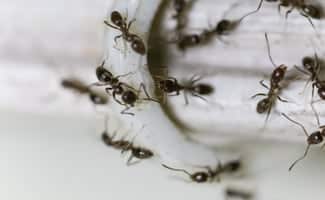
For insects, glue boards and other sticky traps are vital monitoring tools, especially in sensitive environments like hospitals and food processing facilities where insect contamination can threaten health and safety.
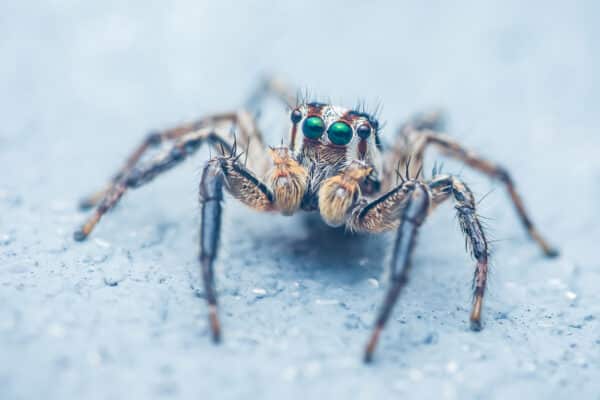
These traps allow pest management professionals to detect and track insect, spider, or other arthropod activity without introducing additional contaminants like pesticides or chemicals.
Glue boards for rodents also play a role in modern pest control programs. As many pest control practitioners work to reduce reliance on toxic chemical pesticides and rodenticides, they turn more frequently to glue traps as one of several non-chemical or lower-chemical options.
Glue traps can be especially valuable when there is an urgent need to stop rodents quickly in areas where contamination risks are high, such as food storage areas, food preparation surfaces, or medical facilities as mentioned above. Used in this way, they support both public health and safety by helping prevent the spread of rodent-borne diseases and the contamination of critical environments.
Concerns with Glue Traps
Despite their benefits, rodent glue traps have generated ethical concerns around animal welfare. Critics argue that these glue traps can cause rats and mice to suffer unnecessarily as they struggle on the adhesive surface.
While rodents can cause severe property damage and are capable of transmitting serious diseases, many people are uneasy with methods that may prolong distress, and each person’s moral threshold for what is acceptable varies.
These concerns arise within a broader public health context. In the United States and much of the Western world, clean water systems, improved sanitation, and modern pest management have significantly reduced the frequency of large-scale outbreaks of rodent-borne and insect-borne disease.
Nonetheless, the list of diseases associated with rodents remains long, and illnesses such as Hantavirus still occasionally result in serious illness or death in parts of the western United States. In less developed regions and throughout much of human history, insect and rodent- borne diseases have caused widespread sickness and death, underscoring the ongoing need for effective pest control.
Recently, several cities in California have banned the sale and use of sticky glue boards for rodents. On its surface, this appears to be an effort to show greater care and compassion for animals.
However, these bans are occurring alongside recent restrictions on certain rodenticides (designed to reduce risks associated with toxic baits) in California. When rodent baits are limited, further restrictions on alternative methods – such as glue traps – should be evaluated carefully so as not to undermine the ability to control rodent populations and protect public health in the long term.
Caring for nature and avoiding unnecessary suffering for rats are important values, but they must be weighed alongside the need to prevent disease and protect human populations.
Professional pest management providers must therefore make careful, case-by-case decisions about when glue boards are appropriate. These decisions should be based on a thorough understanding of the situation, including health risks, environmental constraints, and animal welfare concerns.
Cascade Pest Control uses rodent glue traps only when circumstances clearly call for them, and even then will do so sparingly and thoughtfully, recognizing both their utility and their ethical implications.