Cascade Rat Control—Safe, Effective, Comprehensive

Rat Inspection
& Initial Service
Our technician conducts a careful inspection of your home to locate rat entry points, nests, and use that information to properly set traps and baits.
Rat Protection Service
Rats are highly prevalent in our area; protect your home with Cascade’s perimeter-defense system.
Rat Exclusion
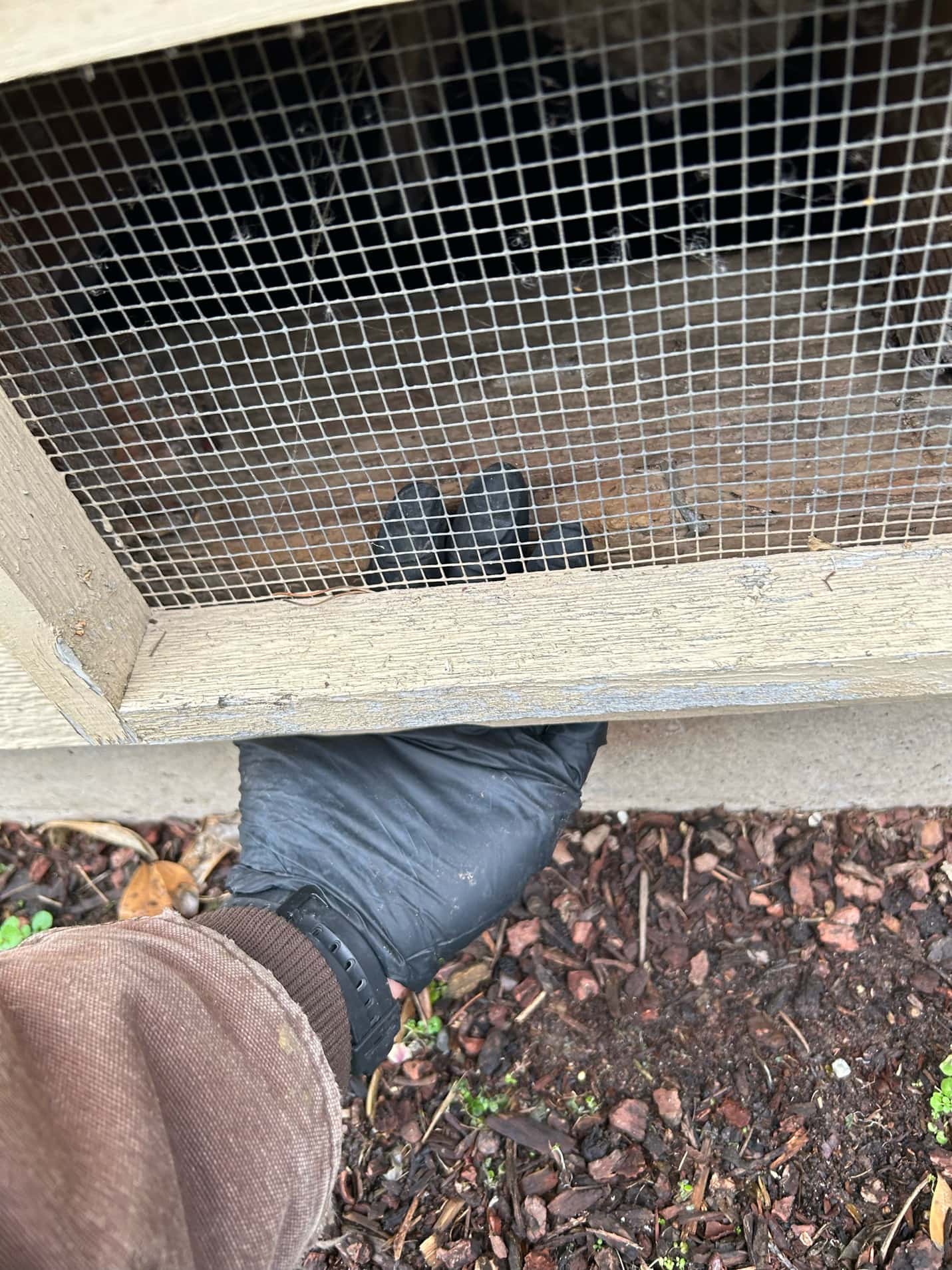
We equip our technicians to effectively seal gaps in various locations and materials, making it difficult for them to gain entry.
Jump to:
- Service Options
- Cascade’s Approach to Addressing Rat Infestations
- The Unique Rat Problem in the greater Seattle / Puget Sound and Boise / Treasure Valley regions
- The Problem with Rats
- Rodent Damage & Disease Video
- How Fast Rats Breed & More…(the evolutionary success of rats)
- Rat Trapping
- Rat Baits and Bait Stations
- Rat Exclusion
- Rat Abatement
Essential Steps: Eliminate Rodent Infestation
AND Establish Perimeter Defense Against Rodent Re-Infestation
Initial Rodent Service — an IPM approach that includes:
- Inspection of home/structure & assessment of rodent infestation
- Rodent Exclusion Recommendations (sealing entry points)
- Set up initial control measures, including trapping
- …and more. Ask for more details
Cascade Inspect
& Protect Rodent Service
Bi-Monthly or Quarterly Service includes:
- Inspect exterior of home for new rodent activity
- Replenish secured tamper-resistant rodent stations around home with fresh bait (noting activity levels) No SGARs used for maintenance service.
- Check, clean & reset exterior-access crawlspace traps set
- Attic Traps checked once per year. (More often in some cases)
Warranty for qualifying* homes includes Free re-treatments for rodents as needed between visits. When rodents have breached the perimeter defenses, we provide extra service at no charge to you.
*Exclusion recommendations must be followed. Homes constructed without full foundations cannot be fully warranted.
Cascade Rodenticide-Free Rodent Protection
Monthly Service Includes:
- Inspect exterior of home for new rodent activity
- Inspect, clean and reset traps within secured tamper-resistant rodent stations around home. (noting activity levels) No Rodenticides used for maintenance service.
- Check, clean & reset exterior-access crawlspace traps set
- Attic Traps checked once per year. (More often in some cases)
Warranty for qualifying* homes includes Free re-treatments for rodents as needed between visits. When rodents have breached the perimeter defenses, we provide extra service at no charge to you.
*Exclusion recommendations must be followed. Homes constructed without full foundations cannot be fully warranted.
Cascade’s Approach to Addressing Rat Infestations
Cascade has been combating rats in the Pacific Northwest since 1979. We have the experience to detect details of rat problems and locate vulnerabilities to rat encroachment.
Cascade’s rodent control system covers such items as:
- Rat nest sites—nests may be found in attics, crawlspaces, garages, and other locations.
- Rat entry points in/on home (or commercial building)—entry points range from gaps or holes in construction, to roof issues (roof rat species), and more.
- Rat burrows—ground nesting of the Norway rat (a.k.a. “sewer rat”)
- Structural locations that are vulnerable to future entry by rats—partially damaged vent screening, uneven garage door closure, etc.
- Food sources for rats
- Rat-damaged structural components and/or stored items.
- …and more
The unique rat infestation problem in the Pacific Northwest region
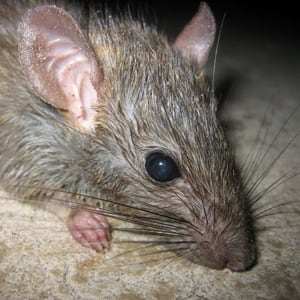
The rat infestation in the Seattle / Puget Sound region now amounts to a high-density rat population currently established throughout all our urban and residential neighborhoods. Rattus norvegicus (the Norway rat, brown rat, wharf rat, or sewer rat) and Rattus rattus (the black rat, ship rat, or roof rat) have displaced other small animals as invasive species until they are firmly entrenched as a serious pest, causing damage and spreading filth.
We have two species of rats, the Roof rat and the Norway rat. While these rats were historically found in seaports such as Tacoma, Seattle, Everett, they are now spreading inland into areas such as Boise, Idaho and other Treasure Valley cities, such as Eagle and Meridian.
That is until our populations grew; along with urban sprawl and rapid increase in suburban neighborhoods in the last part of the 20th century, rats expanded right along with us. Additionally, this same increase in urbanization has caused a more rapid increase in rat infestations throughout the Boise / Treasure Valley regions of the Pacific Northwest.
And these rats love the climate, vegetation, and the beaches and marshlands surrounding the Puget Sound, WA and Treasure Valley, ID.
Cascade Pest Control was founded right here in the Puget Sound area of Washington State in 1979. We’ve watched the resident rat population spread, drastically increase, and become a formidable presence and threat to us.
We at Cascade have amassed a tremendous amount of experience in:
- detecting rats,
- eliminating established rat nests and colonies, and
- designed effective programs to protect against and even prevent future rat infestations.
The Problem with Rats
Having lived along side rats for millennia, humans have a naturally disgust for rats being as they are associated with bites, rat mites, disease, filth, and destruction of food and property. The following are some of the specific reasons why rats are such significant pests here in the greater Seattle/Puget Sound region:
- Rats aren’t natural to the Puget Sound basin, they are an invasive species competing with other, native species.
- Rats damage many thousands of homes’ attic, crawlspace and other insulation annually. And the cost to replace rat-damaged insulation in such difficult places to reach costs thousands of dollars to remove and replace.
- Rats damage other structural items of homes, and rats chew or gang on electrical wiring of homes and businesses, often requiring repairs by an electrician and occasionally starting a fire.
- Rats love to nest in cars, stored RVs and boats. Rats gnaw on auto and other wiring causing expensive repair costs.
- Rats spread filth and disease, contaminating many surfaces and/or stored food.

Rat Damage is Costly—Cascade’s rat control and prevention is the cure.
The two most common and costly problems caused by rats in our area are damaged insulation and ruined automobile wiring.
Rat-Damaged Insulation
When rats enter an attic or crawlspace, they are attracted to live within our insulation. Rats both nest in, and create travel tunnels, in and over structural insulation. This leaves the insulation compressed or shredded to where it has little R-value—it no longer properly insulates your home. This also leaves your insulation, which is just inches from your living space, filthy and contaminated. Removing and replacing rat-damaged insulation in these tight spaces is a dirty job, and expensive costing a lot per square foot of area.
Car, Truck, RV and Boat Damaged Caused by Rats
Rats are very attracted to nest in the enclosed spaces found within automobiles, boats, RVs and travel trailers. Cars and Trucks are hit the worse. Rats nest in various areas of a car, but most often in the engine compartment and rat-damaged engine wiring is very common and expensive to remedy. Rats love to chew the insulation on wiring and use it for nesting. And some “environmentally safe” plastics may even be edible.
How Fast Rats Breed & More…the Evolutionary Success of Rats
- Rats can climb, jump, swim, and even balance along power wires.
- Rat breed quickly, with large litters and runaway populations.
- Rats are geared for survival. Their every move is “life and death” so they are extremely persistent.
- Rats can gnaw through wood (siding, etc), and many roof materials.
- Rats are opportunists—able to eat most anything—from garbage, leftover pet foods, spilt bird seed, barbecue drippings inside BBQ units, many and plants, and even dog droppings.
- Additional rat facts
Cascade’s Rat Control
Rat Trapping
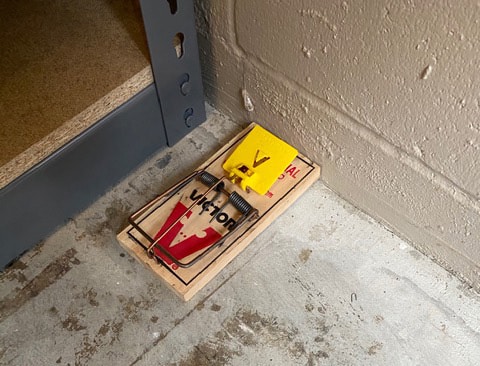
Traps are the quickest remedy for active rat problems. Traps are most often set in attics, crawlspaces, and inside of tamper-resistant “Rat Station” placed outside the home or business. While anyone can be lucky with rat trapping it takes experience and know-how to be successful trapping rats. Rats have initial “new object shyness” that can prevent them from approaching traps and utilizing the best attractants is important.
NOTE – Image: is specific to rat trapping in warehouses, industrial or storage facility where children, pets and non-target animals are not present
Rat Baits and Bait Stations
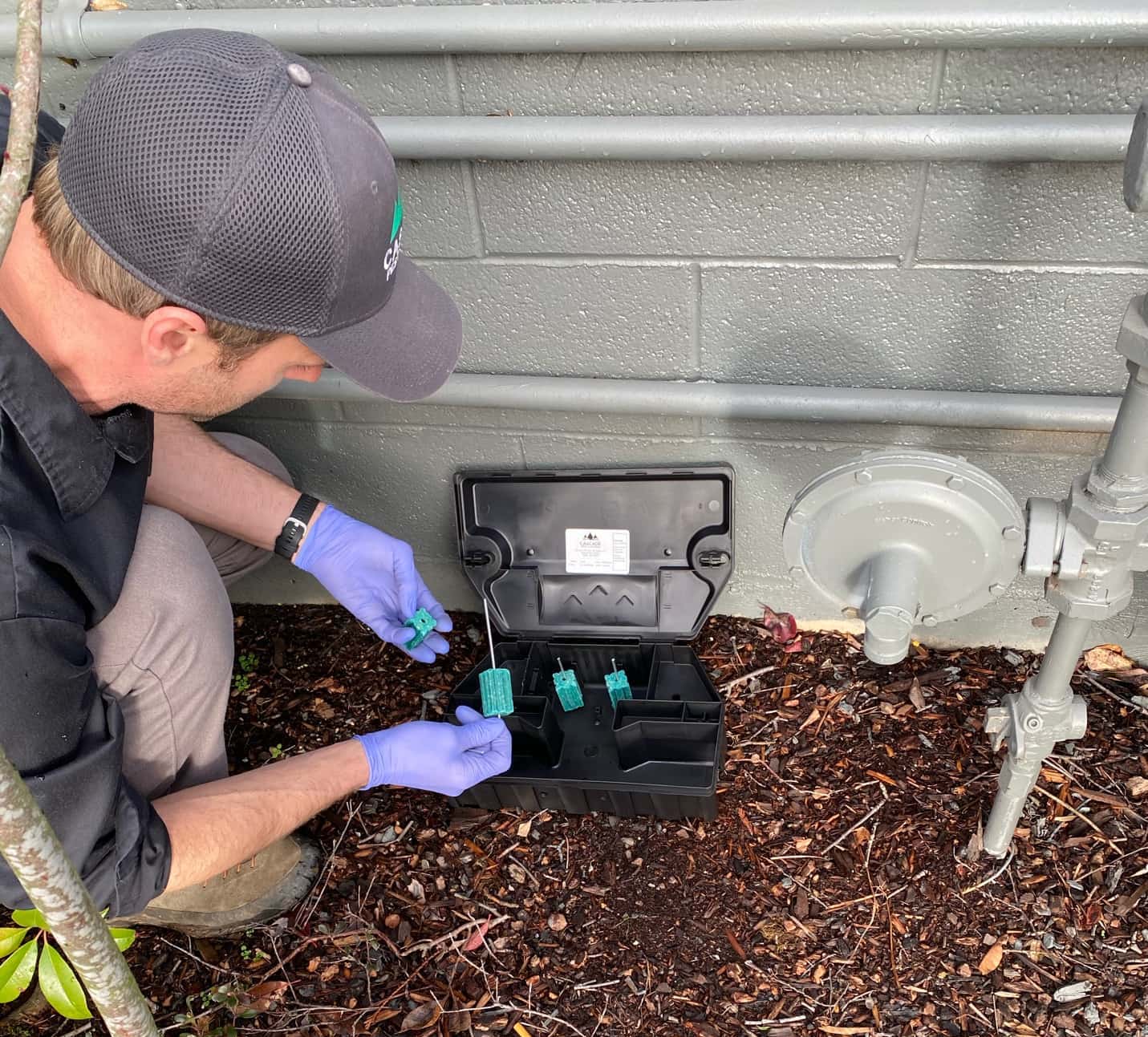
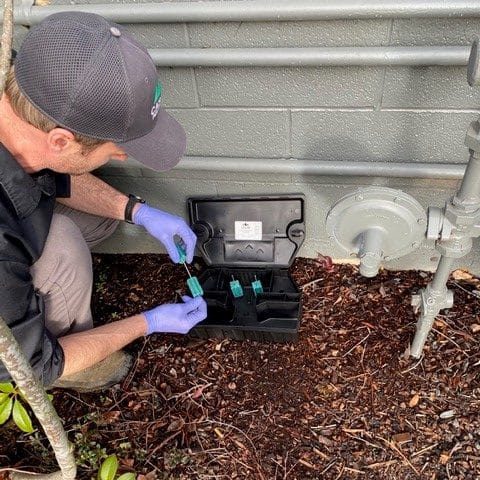
Rat control and prevention relies on the use of baits. These rodenticide baits are kept inside tamper-resistant ‘bait stations’ which are strategically placed outside a residence or other structure. The bait stations prevent access to non-target animals such as dogs and cats.
NOTE – Image: rat bait placed inside tamper-resistant rat bait station. Bait is secured so that it is difficult to fall out or for pets and non-target animals to gain access.
Rat Exclusion
Rat or rodent exclusion amounts to “building them out” by placing metal flashing, steel wool, or steel mesh over gaps, holes and other vulnerable spots to prevent easy access to rats. Many aspects of homes and other structures are built with gaps that are never sealed; and even if they are they are often sealed with caulking or other materials that rats can easily chew through.
Your Cascade technician can note areas where rat-exclusion is needed, and often we can provide an estimate for such work. Sometimes a qualified contractor or roofer is required to provide proper rat exclusion solutions.
Rat Abatement
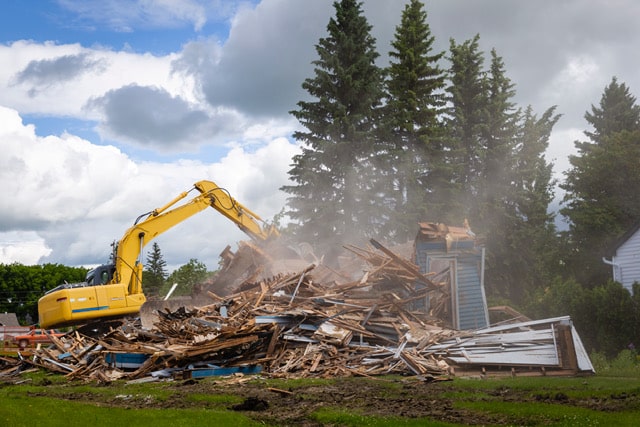
Rat abatement refers to quickly reducing numbers of rats on a given property prior to demolition and/or construction and is required by an increasing number of cities in the region. Cascade Pest Control has extensive rat and rodent abatement experience.
For more information on Cascade’s rat abatement call us at 1-888-989-8979
Rat Control Exterminator
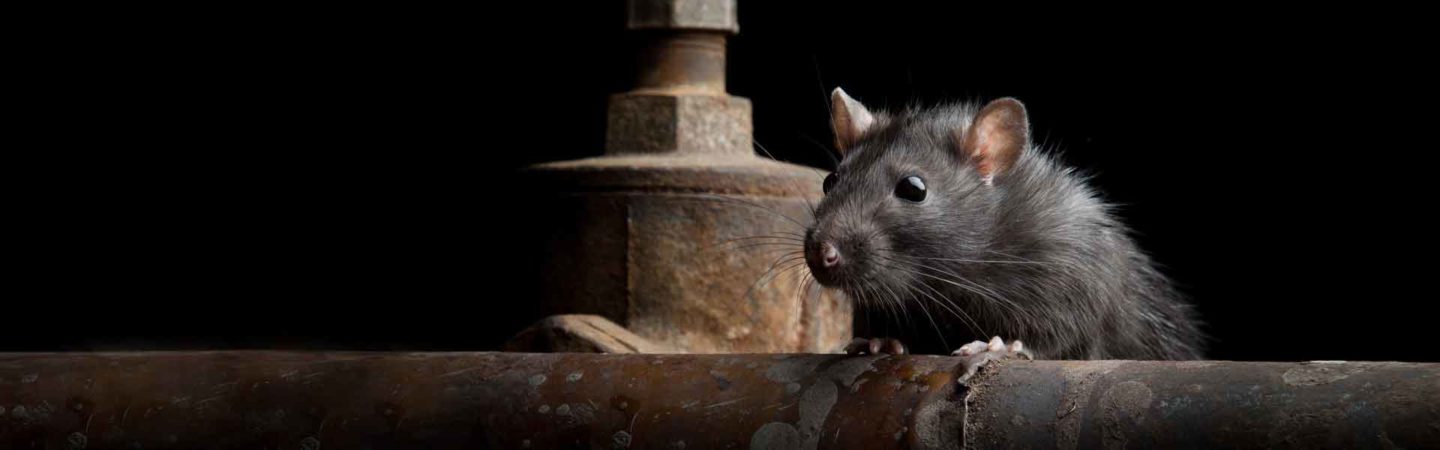
Cascade has been combating rats in the Pacific Northwest since 1979. We have the experience to detect details of rat problems and locate vulnerabilities to rat encroachment.