Pest Extermination in Boise
Boise’s pest problems are shaped by the distinct seasons. Summer brings a surge of mosquitoes, wasps, and flies, while winter drives spiders, boxelder bugs, and more indoors. Each season has its challenges, so year-round vigilance is necessary. Cascade Pest Control and its trained experts are ready to help you take control of your pest problems.
Cascade Pest Control provides safe and effective pest control solutions.

Integrated Pest Management
- Ant Control – A number of local ant species are quick to make their way indoors. Take a stand to keep them out.
- Spider Extermination – Spiders aren’t usually a danger to humans, but they can definitely be a nuisance. Get ahead of the cobwebs.
- Wasp Control – Stinging insects can ruin a good time. Keep wasps, yellowjackets, and hornets out of your outdoor living spaces.
- Termite Treatment & Extermination – Subterranean and dampwood termites should be stopped before they cause extensive and expensive damage. Don’t wait to get professional help.
- Mosquitoes – Reclaim your backyard peace. Get help knocking out mosquitoes.
- Boxelder bugs, Sow Bugs, Roaches, Flies, Fleas, Beetles, and more.
- See other Boise pests below!
Boise Rodent Control
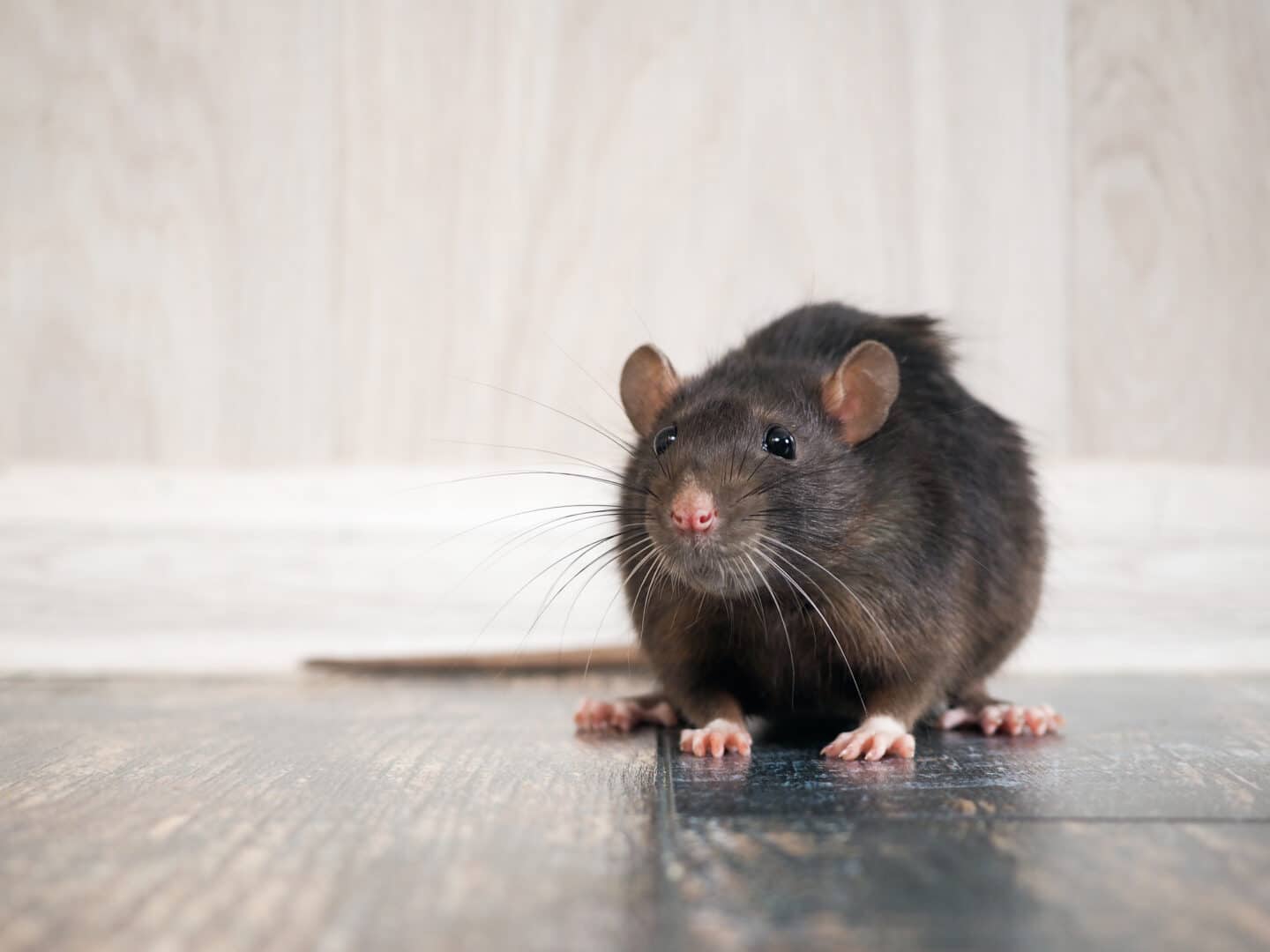
Whether you are in urban, suburban, or rural areas of Boise / Treasure Valley, rodents are poised to make an appearance. Rats and mice thrive in living adjacent to humans. Strive to make your home less appealing to rodents. Seal up cracks, clean up organic debris, store food in sealed containers, and watch for evidence of an infestation. If you need a hand, call the experts at Cascade Pest Control.
Expert Rodent Control Services
- Rat Control – Boise is home to roof rats, pack rats, and Norway rats. No one wants to share space with a rat. Get help from our certified rat control technicians.
- Mouse Control – Fields and forests can serve as breeding grounds for mice. Once mice have a foothold in your home, they can reproduce at an astronomical rate. Cascade is a local Boise mouse exterminator.
- Rodent Exclusion Services – includes a home inspection to detect entry points, which can be found in roof vents, construction gaps, damaged screens, poorly fitting garage doors and much more. Once found, repairs are made to seal these openings.
Stop rodents with Cascade Pest Control.
Other Boise Pest Control Pests:
Bed Bugs
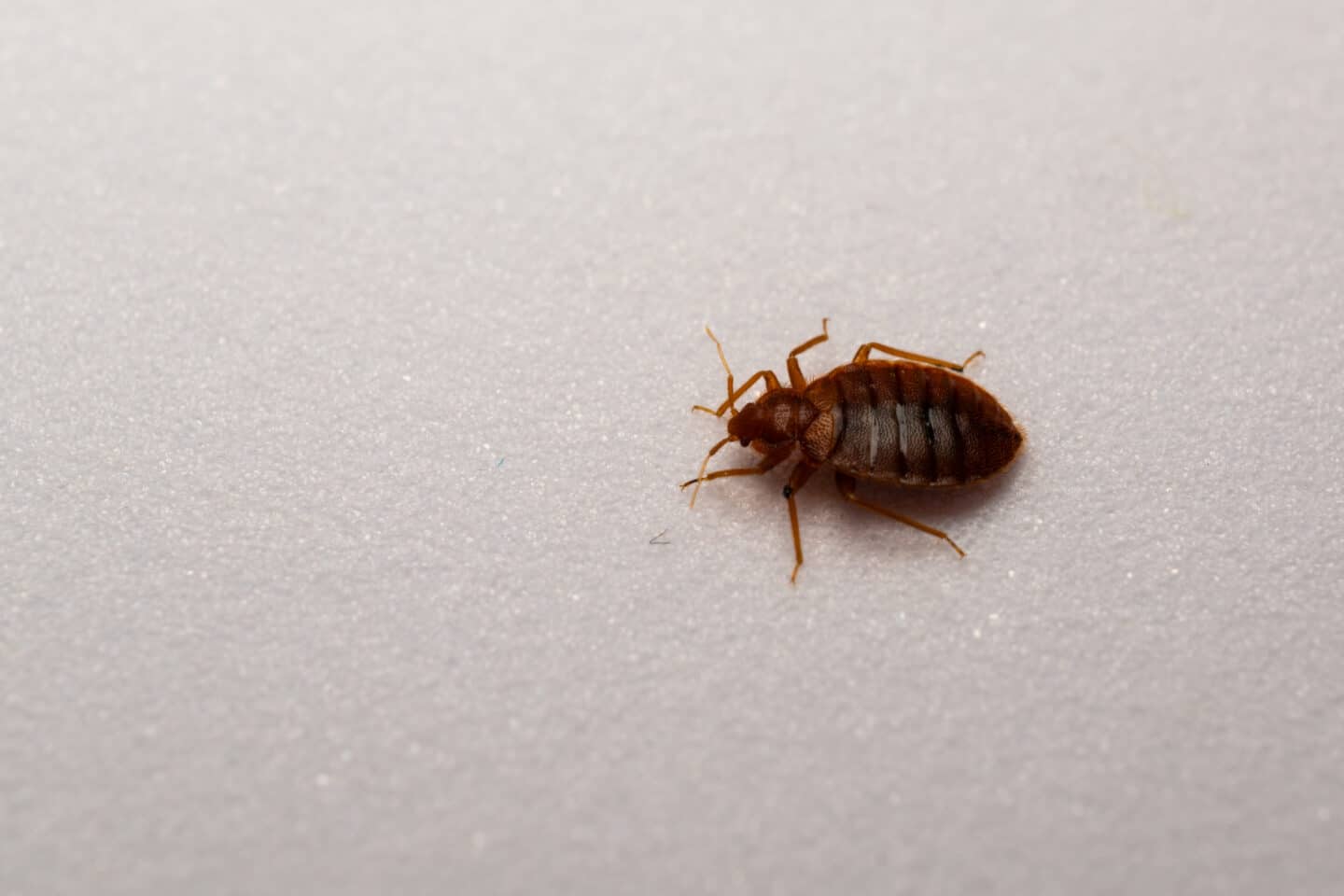
Bed bugs are notorious for biting people and becoming infested in a home and for being so tedious to control. Bed bugs are mostly brought into a home in luggage or other personal items after traveling although they can be brought in from more local encounters.
Red Fire Bugs
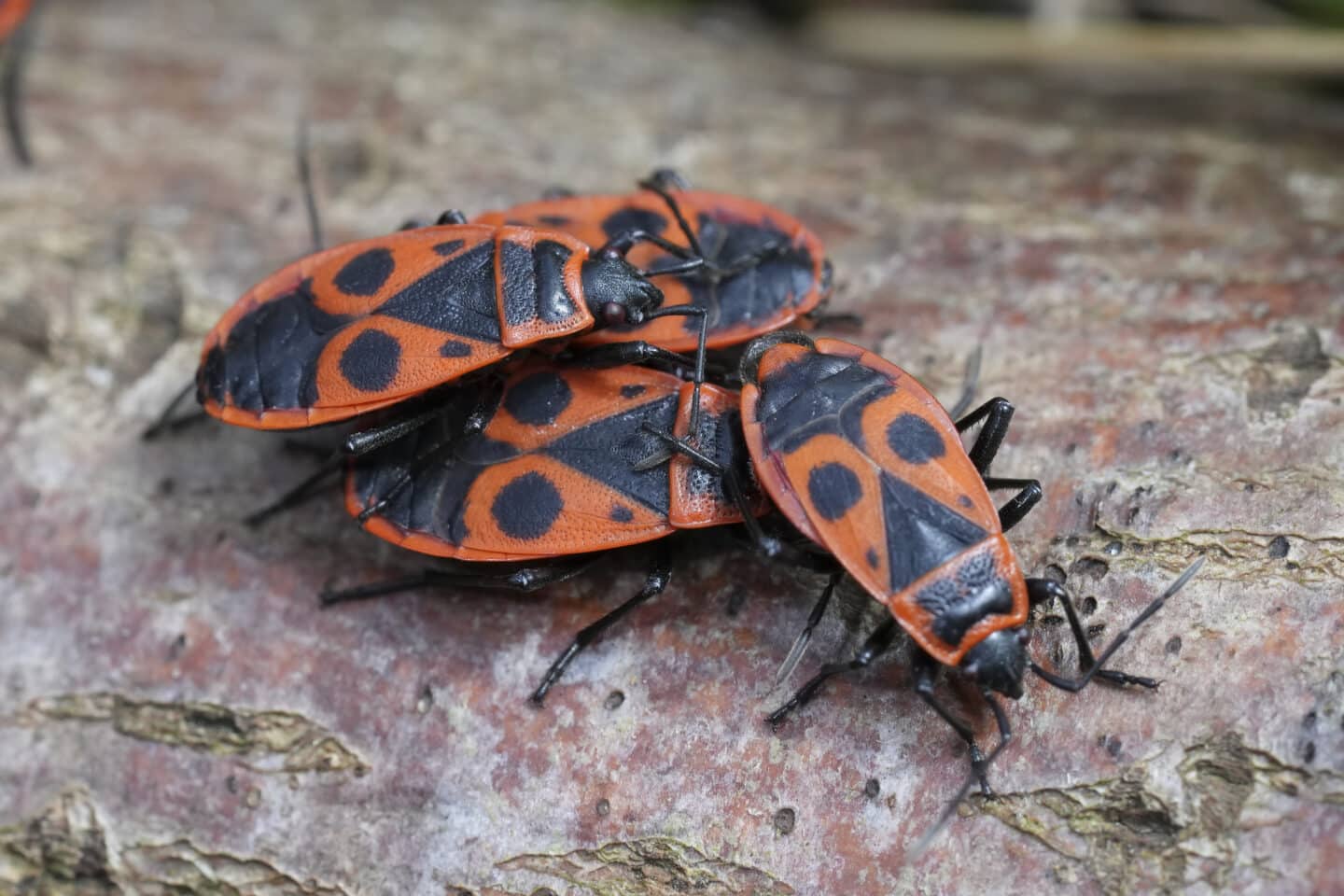
Red Fire Bugs are a nuisance pest that originated in Europe and are now spreading throughout Idaho and some other states. Red Fire Bugs can give off horribly foul odors when disturbed or crushed.
Wolf Spiders
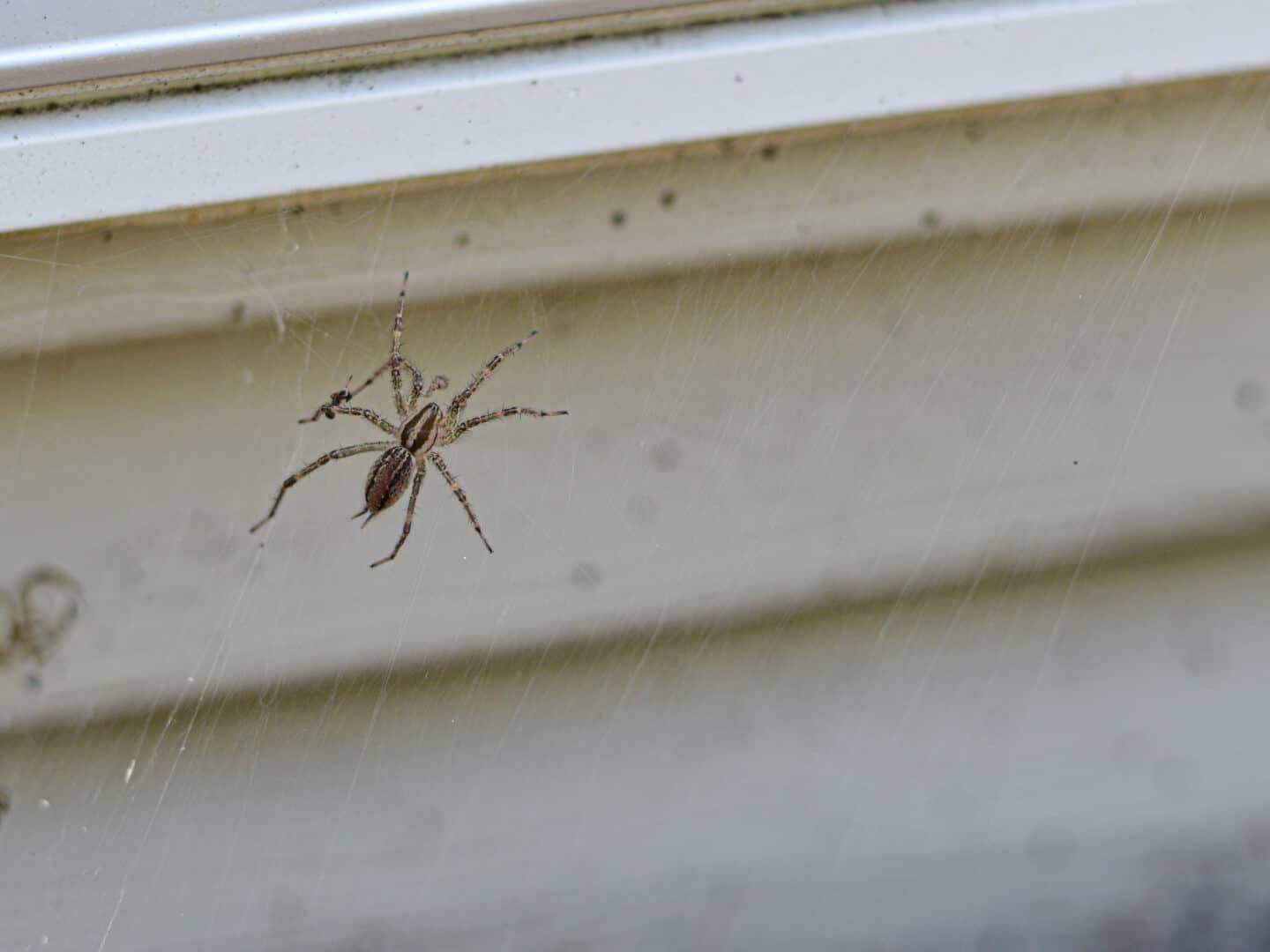
Wolf spiders are common in the Boise, Idaho area. They’re large, hairy, ground-dwelling spiders (typically brown or gray with darker markings) that hunt prey by chasing it down rather than spinning webs to catch it. They’re often found in gardens, basements, garages, and under rocks or woodpiles. Wolf spiders are not aggressive toward humans and their bite is only mildly venomous.
Jumping Spiders
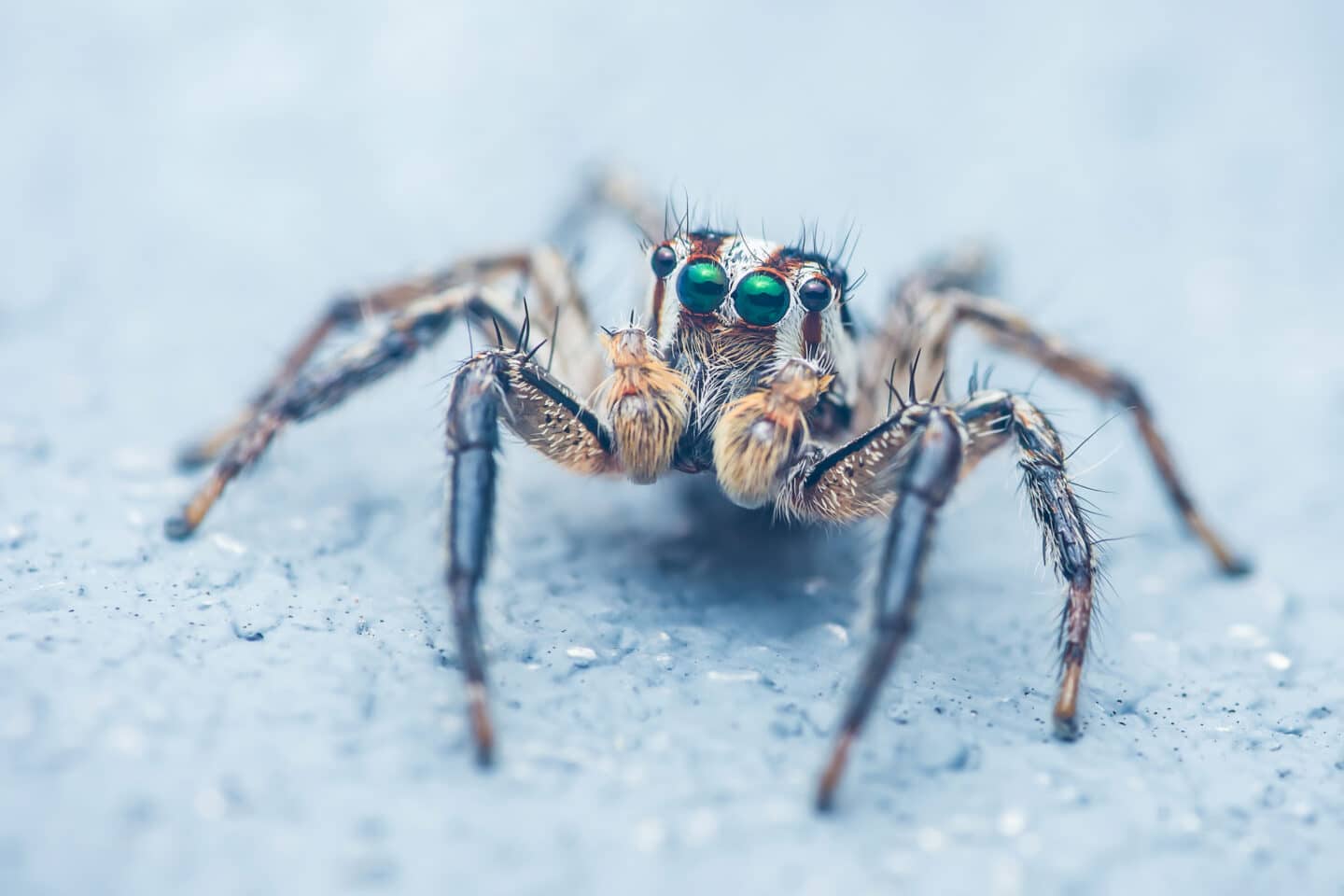
Jumping spiders are also common in the Boise area. They’re small, compact spiders—usually under half an inch—with distinctive large front eyes that give them excellent vision. As their name suggests, they hunt by stalking and pouncing on prey rather than building webs, capable of jumping many times their own body length. They are generally considered harmless and mostly a nuisance.
Clover Mites
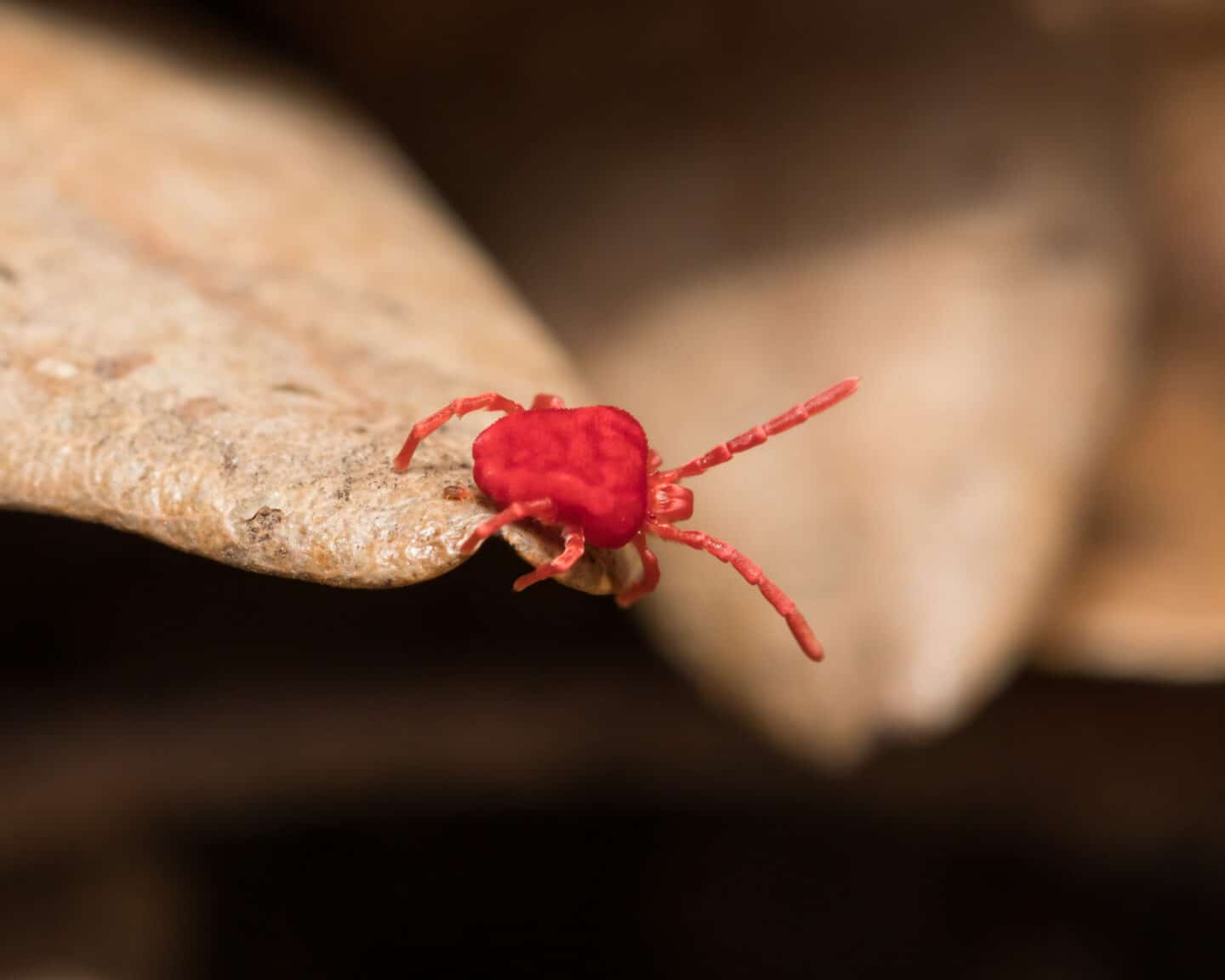
Clover mites are tiny, reddish-brown pests common in the Boise area. They’re barely visible to the naked eye—about the size of a pinhead—with notably long front legs that extend forward like antennae. They feed on grass, clover, and other plants, and tend to migrate indoors in large numbers during spring and fall when seeking warmth or escaping weather changes, often appearing on windowsills and walls. They can leave reddish stains if crushed.
Elm Seed Bugs
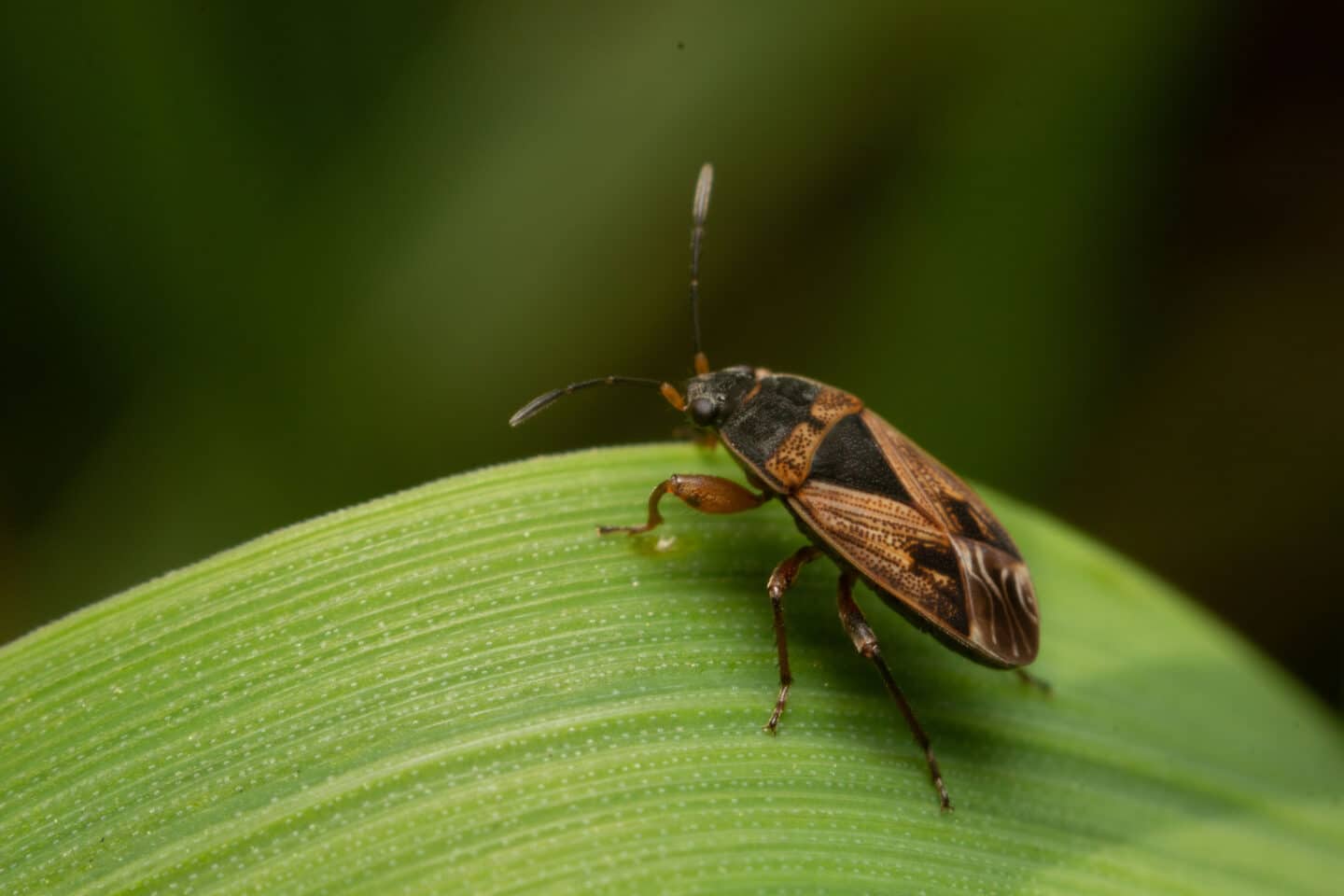
Elm seed bugs are a relatively newer pest in the Boise area, first showing up in Idaho in recent years and becoming increasingly common. They’re small, brownish-black insects with an orange-edged, shield-shaped body, often mistaken for boxelder bugs. As their name suggests, they feed primarily on the seeds of elm trees, but they can emit an unpleasant, pungent odor when crushed or disturbed. If you find them in your home, call Cascade Pest Control.
Billbugs
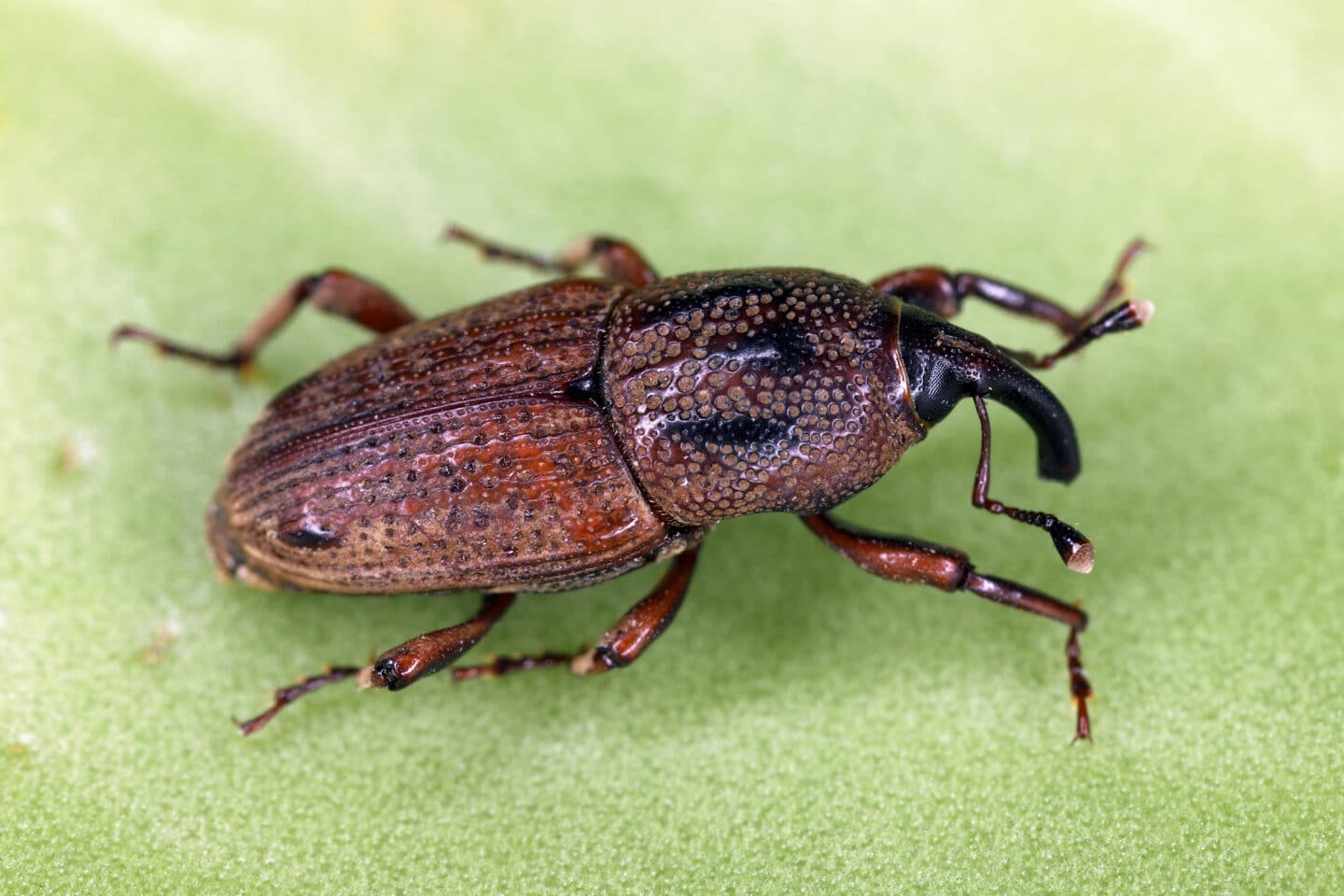
Billbugs are a common lawn pest in the Boise area, particularly affecting Kentucky bluegrass lawns. The adults are small, dark grayish-black weevils with a distinctive elongated snout, while the larvae are legless, white grubs that do most of the actual damage. Cascade Pest Control doesn’t treat lawns, however can help you if billbugs wander onto or into your home.
Asian Lady Beetles (Asian Beetles)
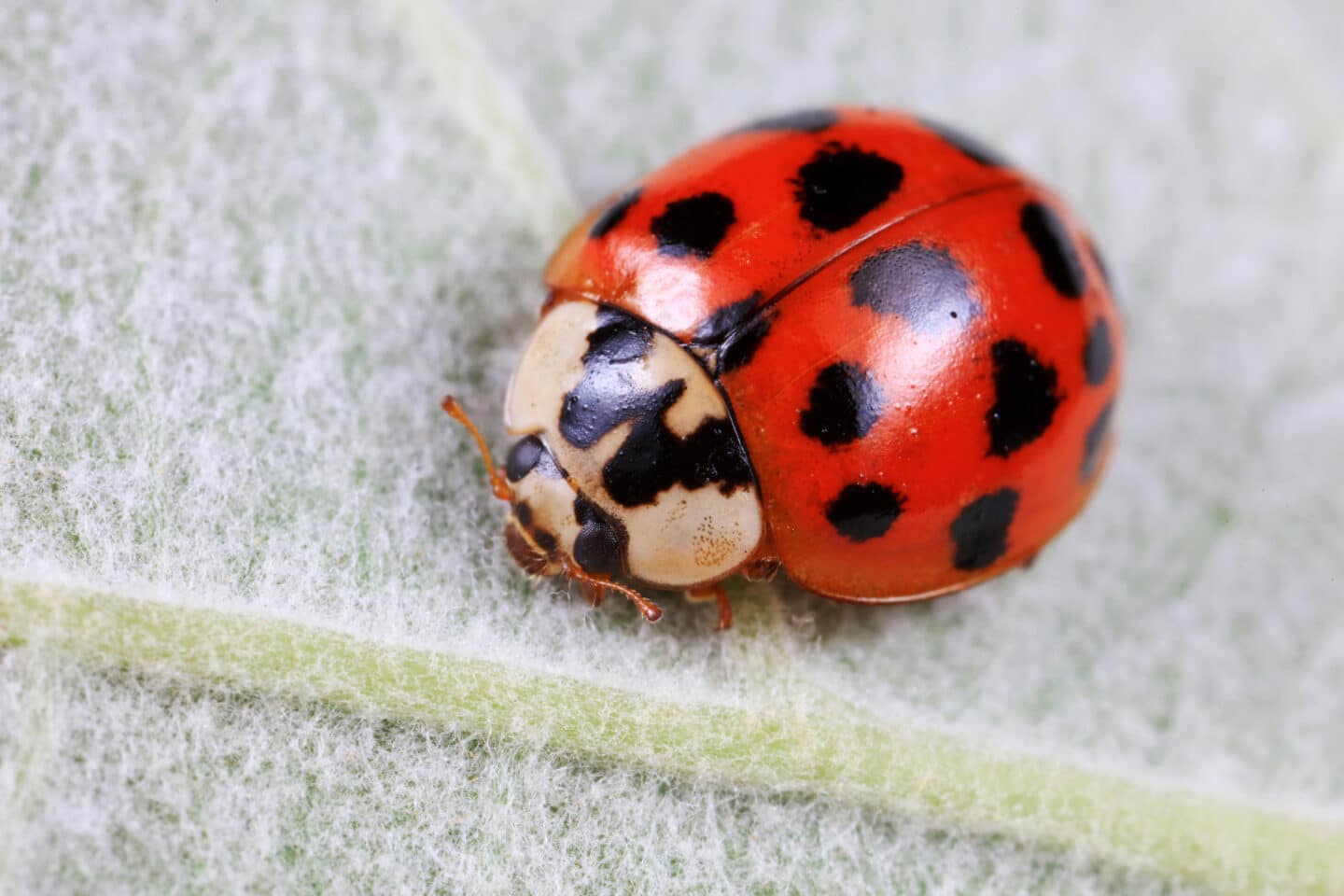
Asian lady beetles are a common fall invader in the Boise area, often confused with native ladybugs. They’re oval-shaped beetles with a characteristic black “M” or “W” shaped marking behind the head. They were originally introduced to North America for aphid control and remain beneficial in gardens, but in fall they gather in large numbers on sunny, light-colored exterior walls before squeezing indoors to overwinter. Asian lady beetles tend to cluster indoors in large swarms, and release a yellowish, foul-smelling defensive fluid when disturbed or crushed, which can also stain surfaces
Springtails
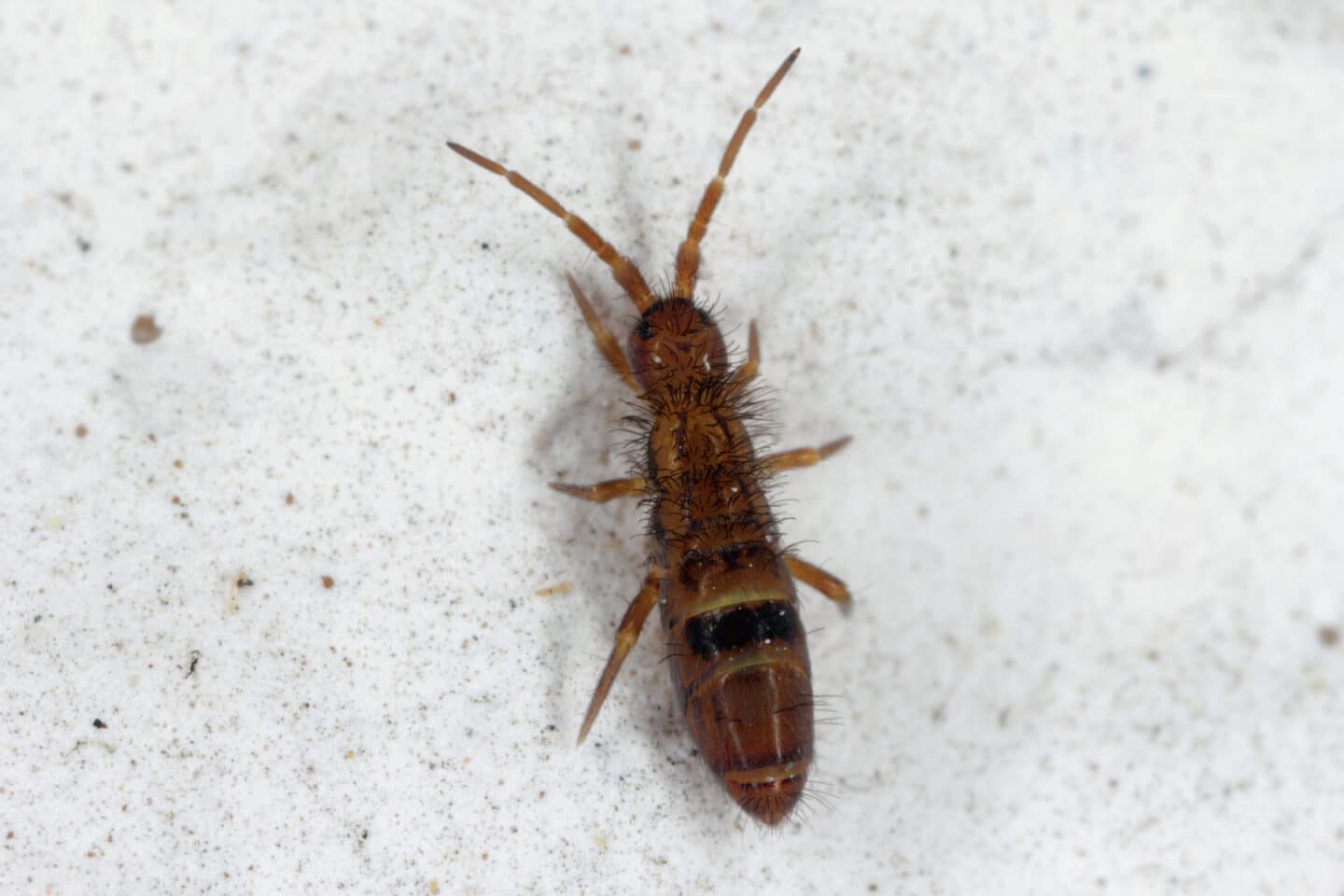
Springtails are tiny, common pests in the Boise area, especially in areas with excess moisture. They’re extremely small—often under 1/8 inch—and get their name from a forked appendage (furcula) tucked under their abdomen that lets them spring or jump when disturbed, giving them a flea-like appearance. They thrive in damp environments like basements, bathrooms and large indoor populations are usually a sign of an underlying moisture issue worth addressing.
Gnats
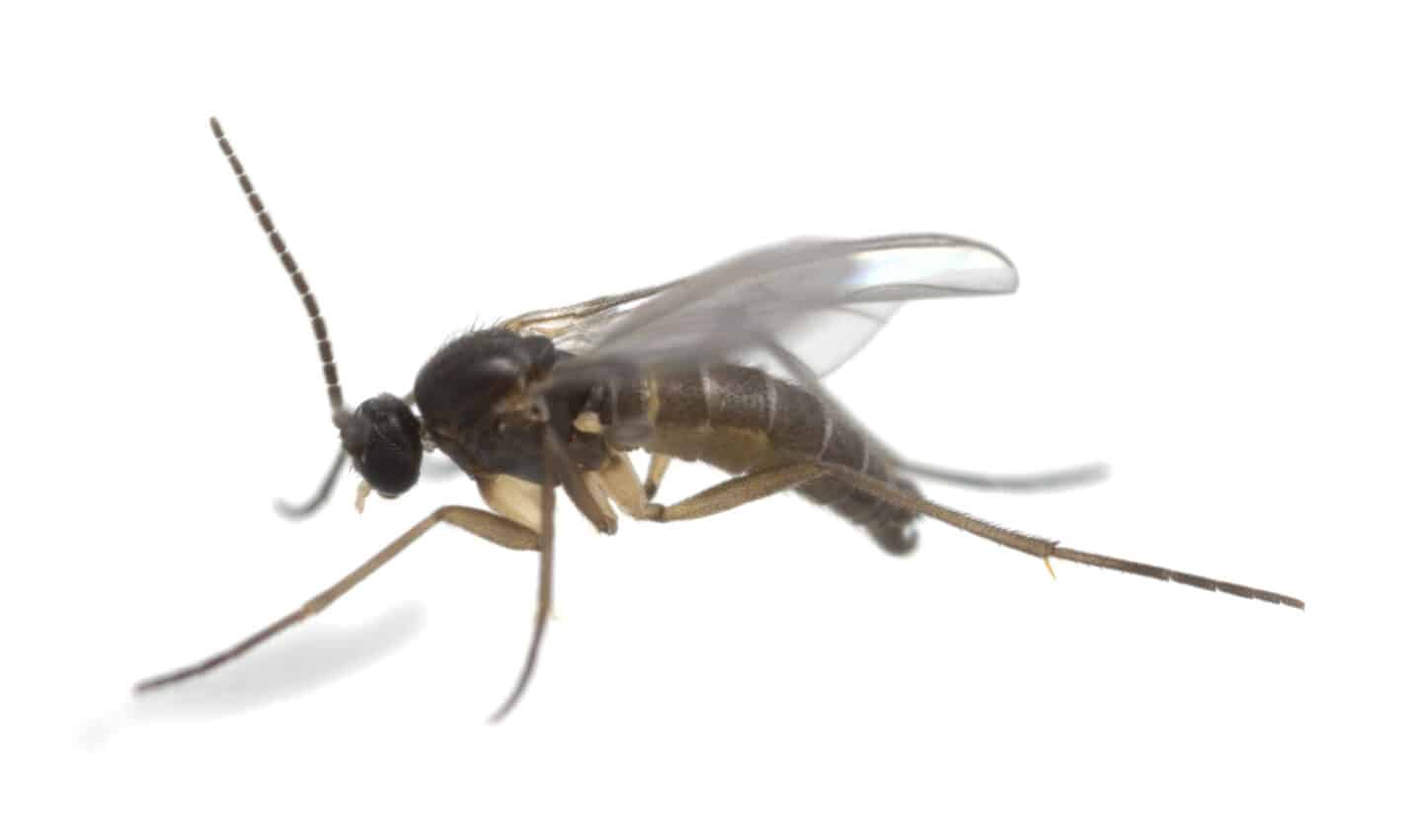
The Boise area gnats most often refers to fungus gnats, the small, dark, mosquito-like flies commonly seen indoors around houseplants. They’re thin-bodied with long legs and translucent wings, and their larvae live in moist potting soil where they feed on fungi, algae, and decaying plant matter—overwatering is the usual culprit behind an infestation.
Drain Flies
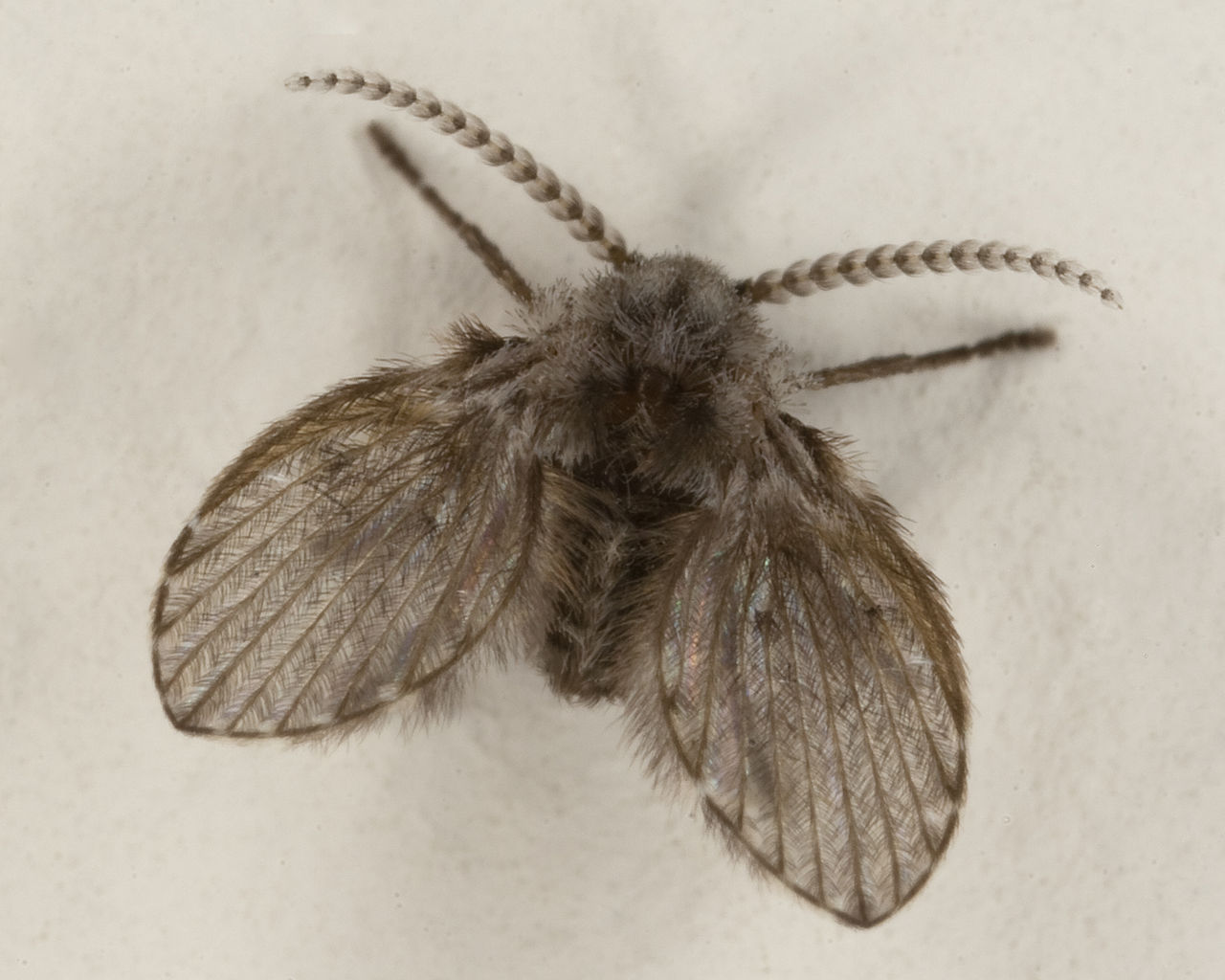
Drain flies get their name from the fact that they are attracted to the slime found within floor drains, most often found in showers, basements and other areas. Controlling drain flies consists of thoroughly cleaning out the drain of scum (organic matter) within which they lay eggs and the larvae thrive within.