Yes, Bald-Faced Hornets are a regular, native threat for Idaho home and business owners. Here’s how to identify them, locate their nests, why they can be dangerous, and when to call for professional wasp control.
How to Identify Bald-Faced Hornets

While they bear the name “hornet”, these insects are actually aerial yellowjackets rather than true hornets. To identify them, look for these notable features.
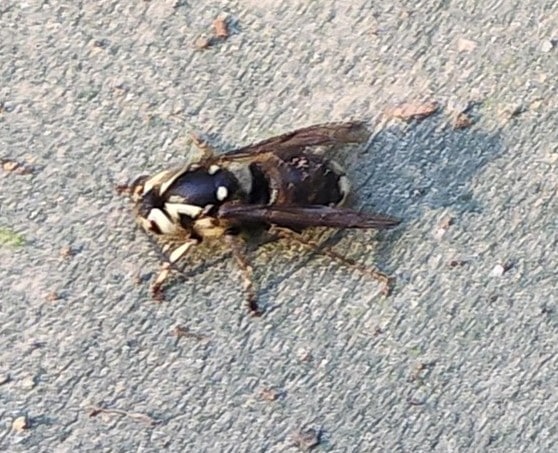
- Distinct Facial Markings: Bald-faced hornets have large, white / ivory patterns on their heads, giving them a “bald” look.
- Body Patterns: The bald-faced hornet has completely black-and-white stripes running along its lower abdomen, rather than the black-and-yellow stripes of other common wasps and stinging insects.
- Nest Shape: They build enclosed, grayish, paper-like shells that resemble a football or upside-down teardrop.
- Behavior: Bald-faced hornets are highly defensive of their nest. They will swarm aggressively if threatened and attack anything that vibrates or gets too close to their nest.
Where Bald-Faced Hornets Nest Around Boise / Treasure Valley
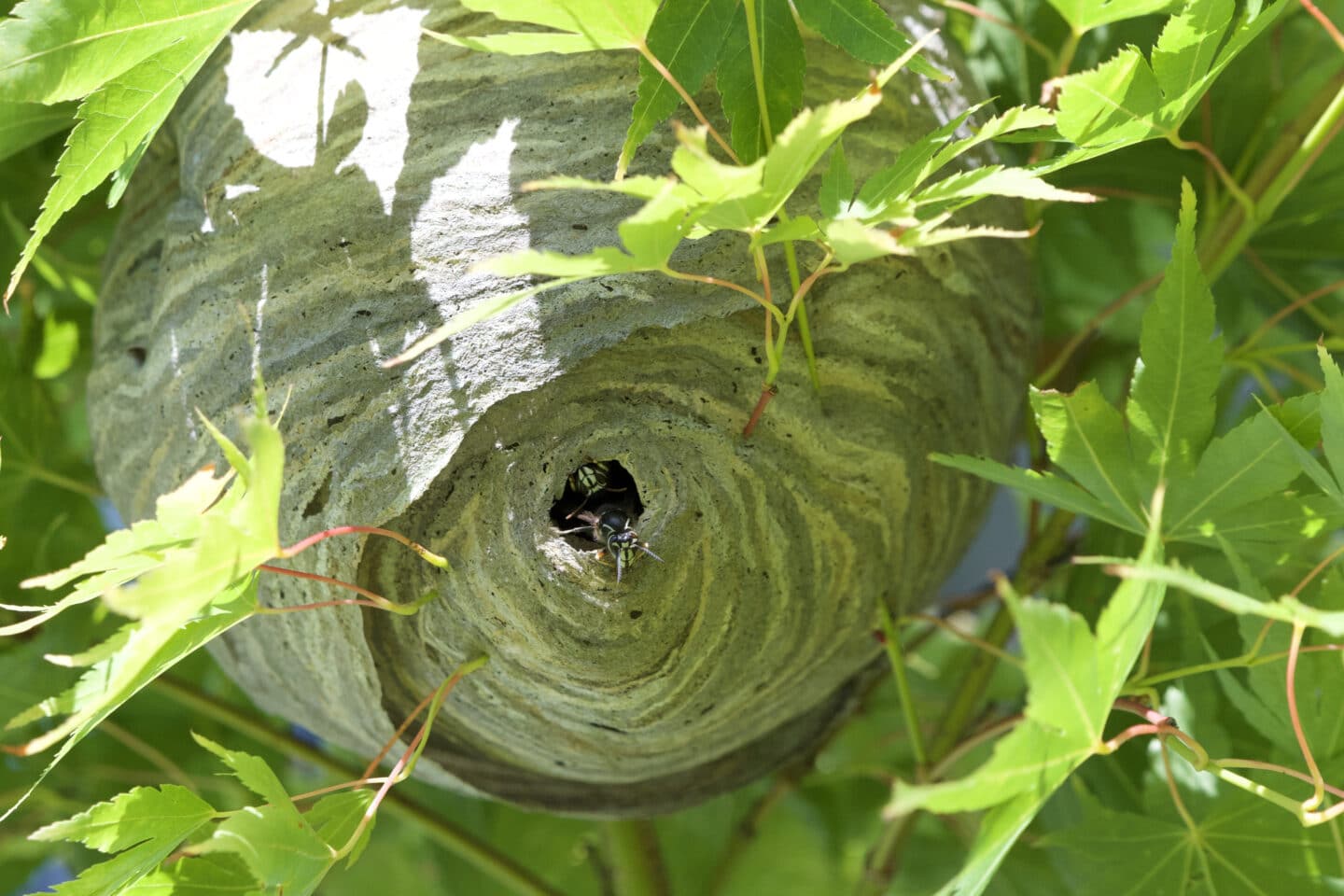
Bald-faced hornets build their many-layered, football-shaped nests above ground, unlike their yellowjacket cousins who build underground. This often makes the nests more visible to homeowners.
Common bald-faced hornet nest sites include:
- In trees and shrubs
- Under eaves
- In sheds
- Along fence lines
- In play structures
Their nests are usually built high in the air, anywhere from 3 feet in a shrub to 60 feet up in tree canopy. They have a single, distinct hole in the bottom of the nest. The colony begins in the spring and grows throughout the summer.
Why Bald-Faced Hornets Can Be Dangerous Near Homes
Bald-faced hornets can be a concern for homeowners because of the aggressive defense of their nest.
- Multiple stings: Unlike honeybees, bald-faced hornets have smooth stingers, allowing them to sting repeatedly without dying.
- Venomous Spray: Another nasty trick is that they can spray or squirt venom from their stinger into the eyes of intruders, causing temporary blindness.
- Swarming Nature: They defend their nest aggressively, so if they are disturbed, hundreds of hornets swarm out of the nest to attack simultaneously. Even the vibration of a nearby mower can be enough to set off their defensive instincts.
When Are Bald-Faced Hornets Most Active in Boise
- Spring-Summer: As the queen comes out of winter dormancy, she begins to build her nest. A spring nest may be only golf-ball-sized, but it will grow and expand throughout the summer. Summer is the peak time for bald-faced hornet activity. A nest may reach the size of a basketball or larger with 400 or more workers.
- Fall-Winter: In fall, the colony begins to collapse. After the first frost, most of the workers die off. However, don’t assume that a seemingly abandoned nest is empty; some workers may be dormant and will attack if disturbed. Wait until winter to remove nests if doing it by yourself. (These hornets will not return to the same nest in the spring; they will build a new one.)
Bald-Faced Hornets vs. Other Stinging Insects
| Insect | Identifying Features | Nest Type | Location of Nest | Risk to Homeowners |
| Bald-Faced Hornet | Large, black-and-white coloring; about ¾ inch long | Gray, enclosed, football-shaped paper nest | Above ground on trees, shrubs, eaves, overhangs, etc. | Can sting multiple times, defends aggressively |
| Yellowjackets | Smaller, bright yellow-and-black body | Hidden paper nest, usually underground or inside wall/soffit voids | Ground nests, hollow spaces, wall voids, and around homes | Very aggressive around nests and a major stinging hazard |
| Paper Wasp | Slender wasp, often brown with yellow markings; long legs dangle in flight | Open, umbrella-shaped nest with no outer shell | Protected above-ground spots like eaves and overhangs | Usually less aggressive and more likely to sting when trapped or disturbed |
What To Do (And Don’t Do) If You Find a Hornet Nest
To Do:
- You can attempt to remove a nest by yourself if it is less than golf-ball-sized. But take precautions and be aware of the risk.
- If it is a mature nest, call a professional, such as Cascade Pest Control. Because of their aggressive swarming, repeated stinging, and venomous spray, a full-sized hornet’s nest is a pest job better left completely alone by homeowners.
To NOT Do (and why):
- Spray with pesticide. Even if sprayed from yards away, when the spray hits the nest, hundreds of workers emerge at once and target the threat. In addition, one can of spray usually falls short of eliminating hundreds of furious hornets.
- Use ladders to remove nests: Add altitude to the mix, and you have a toxic situation. Attempting to reach nests that are too high to access safely just adds fall risk to the equation.
- Risk angry hornets even with protective gear: Even if you wear a hat and safety glasses, a face full of vengeful hornets is not something to risk.
Tips for Idaho Homeowners
- Stay diligent, especially in the spring. Inspect eaves, sheds, shrubs, and playsets regularly.
- Reduce nesting opportunities. Make sure gaps around the home are sealed, and keep the yard clutter-free.
- Contact Cascade Pest Control if you find you have an active hornet’s nest. Don’t delay, as the risk only increases as the colony grows. (Consider an early spring inspection to reduce risk later in the year.)
For identification, removal, and prevention of bald-faced hornets, call Cascade Pest Control today. Our expert wasp control technicians can walk you through the steps of safeguarding your home and peace of mind.