Can Ants Detect Cancer in Urine? What a Study Really Found
When most people think of ants, they may think of ruined picnics, invaded pantries, or supersized colonies. But researchers are studying this ubiquitous insect for a surprising reason: their powerful ability to detect odors.
A 2023 study published in Proceedings of the Royal Society B: Biological Sciences by researchers at Université Sorbonne Paris Norde and collaborating institutions found that a common ant species could be trained to distinguish urine from healthy mice from urine from mice carrying human breast-cancer tumors.
The results are intriguing but they do not mean ants are ready to diagnose cancer in people or that an ant-based test is currently available (or even will be available). Instead, the research is an early proof of concept that may eventually help scientists develop lower-cost, noninvasive screening tools for certain types of cancer.
How Ants Detected Tumor-Related Odors
Many illnesses can change the volatile organic compounds (VOCs) a body releases. VOCs are tiny airborne chemicals present in breath, sweat, urine, and other biological samples emitted by a living thing. Cancer can change an organism at a cellular level, causing alterations of these chemical odor patterns, giving trained animals – or specially designed instruments – something to detect.
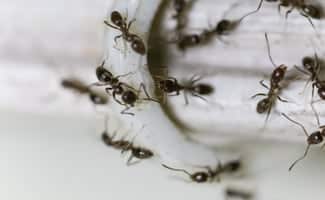
The researchers studied the silky ant, Formica fusca, a species found throughout much of Europe and closely related to species found in the Pacific Northwest. Ants do not use a nose to smell but instead detect odors through olfactory receptors in their antennae. This ability is vital to an ant’s survival as scent is used to communicate, identify friend from foe, locate food sources, and follow trails. They are biologically sensitive to chemical signals in their environment, making them prime options for cancer detectors.
For the study mentioned above, scientists transplanted human breast-cancer tumors into laboratory mice. They then collected the urine from tumor-carrying and healthy mice and compared their urine samples.
After only three training trials with the urine samples, the ants learned the association between healthy urine (no sugar reward) and cancer-carrying urine (sugar reward). Even when the sugar reward was removed, ants still spent more time at the tumor-bearing urine than the control.
What the Researchers Found
The experiment involved 70 ants, with half trained using urine from tumor-bearing mice and half trained using urine from healthy mice.
Researchers found that:
- Ants needed only three conditioning trials to learn the odor-and-reward.
- It only took about 10 minutes on average to condition one ant.
- When the sugar reward was removed, ants still spent 20% more time near the odor they had been trained to recognize.
- Chemical testing determined that the urine odor profiles of the two samples (cancer-carrying and control) differed.
Important Limitations
While this is a fascinating study, context still matters. The study did NOT test urine directly from humans – with or without cancer. The urine was from laboratory mice carrying human breast cancer tumors.
This is a crucial distinction because human screening is much more complicated. Real-world samples from humans can vary greatly due to diet, medications, age, genetics, stress, chronic conditions, and so many more. Even the researchers concede that much more needs to be done – verification of methods, validation with other cancer types, and human testing – before this process could be used for routine cancer screening.
So, while the research is promising and ants may someday contribute to diagnostic cancer screening, no one should rely on ants – or any animal – to determine whether they have cancer.
Why This Matters
Scientists have long studied how animals detect odor:
- Dogs, for example, have been used to identify certain disease-related odor patterns.
- Other animals like African giant pouched rats, honeybees, and even tiny worms have all been noted for their ability to detect chemical markers from everything from cancer to tuberculosis to COVID19.
- Ants are particularly compelling to researchers because they are small, relatively inexpensive to maintain, available in large numbers, and capable of rapid odor learning.
Now let’s be real, we’re not all going to be mailing urine samples to an “ant lab” anytime soon. However, studies like this may advance research into which odor compounds are associated with specific diseases and inspire new, inexpensive, convenient, noninvasive technologies.
Ants In Their Place
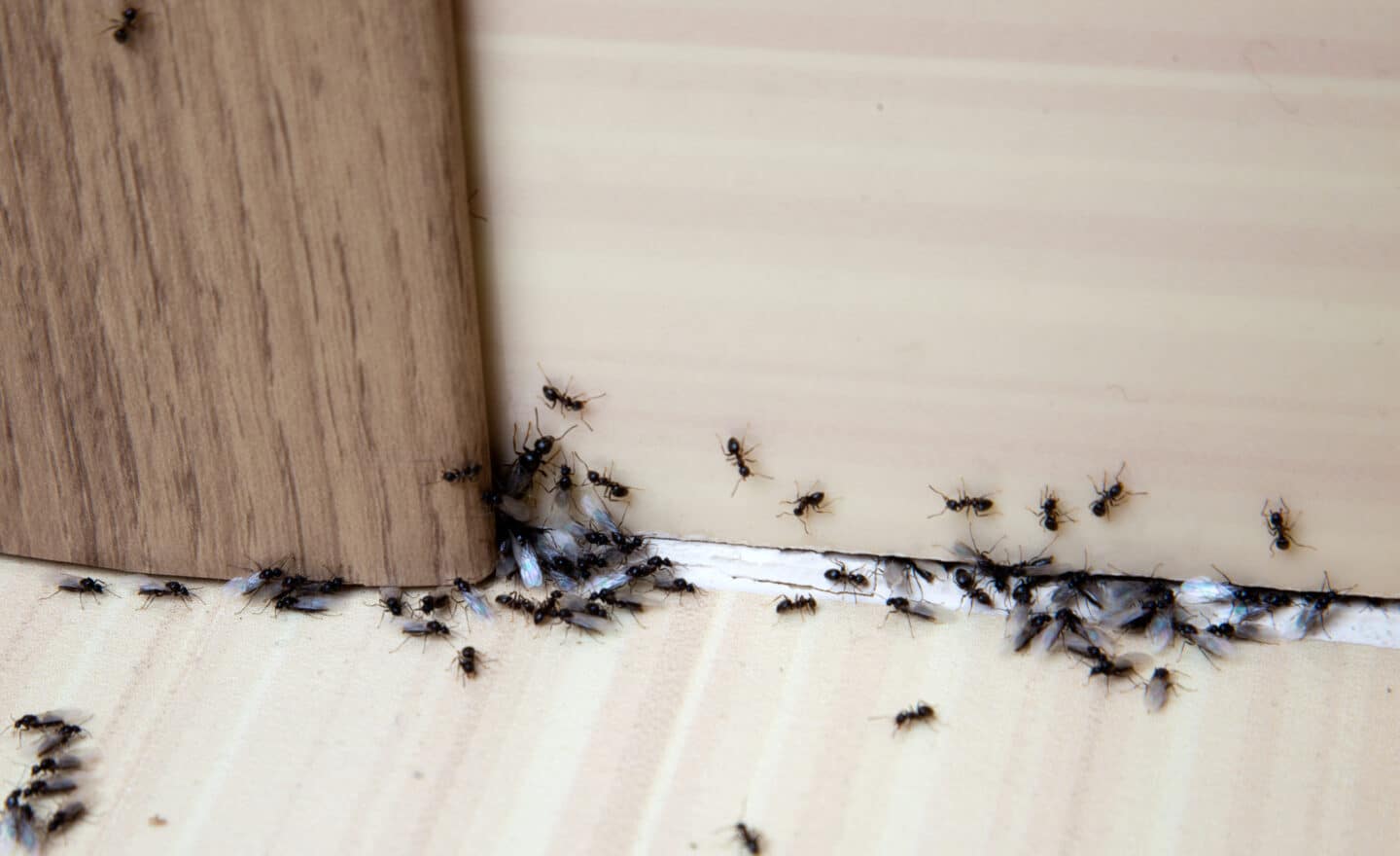
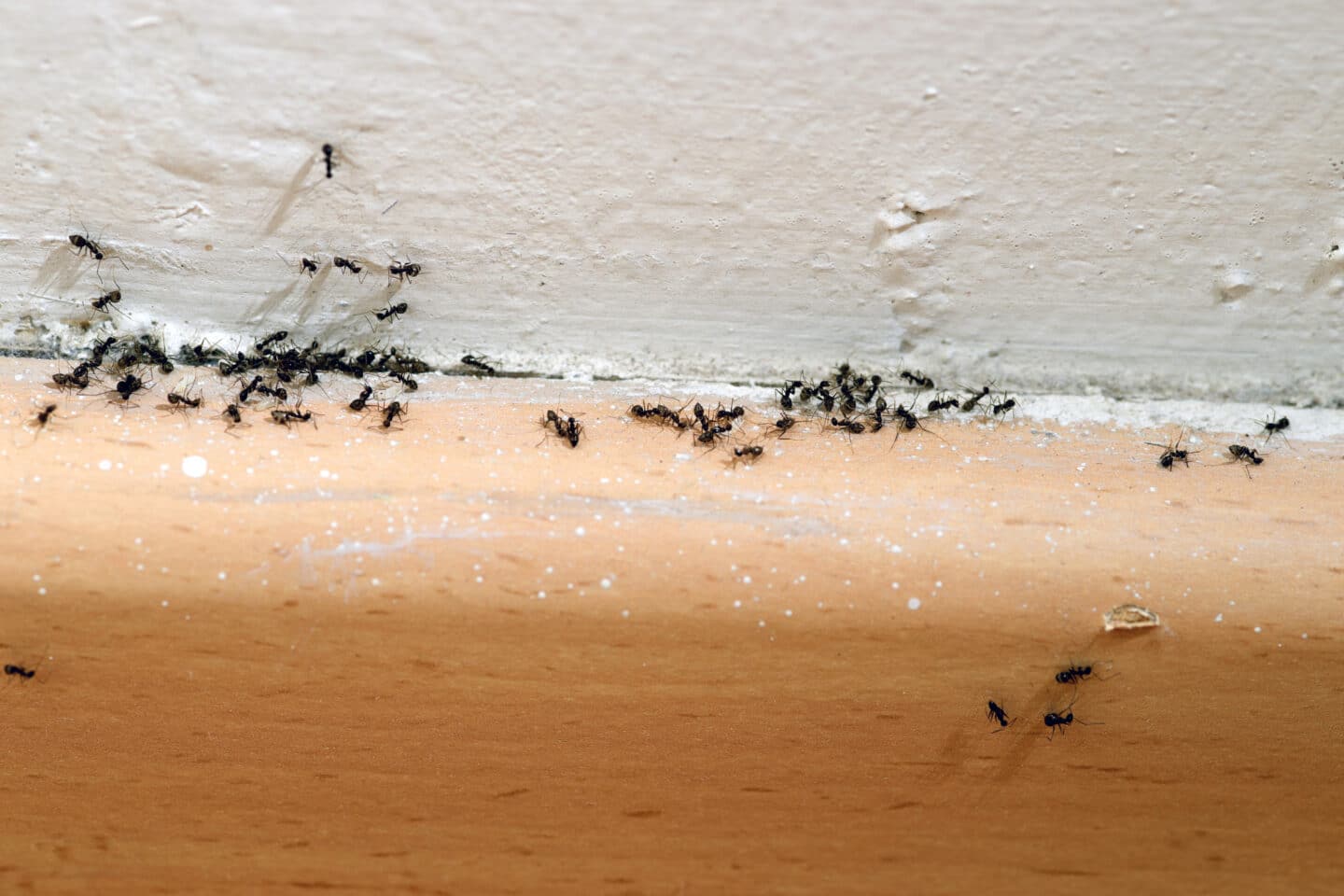
While scientists may welcome their remarkable abilities in the lab, homeowners usually encounter ants in a less ideal setting: kitchens, bathrooms, pantries, wall voids, and around foundations.
Even a few ants can signal a bigger problem. A colony grows quickly near a food or moisture source. Because ants communicate through scent trails, the occasional scout can quickly become a steady stream of invaders.
If ants are showing up in your home, Cascade Pest Control can help identify the problem, locate entry points, and propose effective ant treatment options. Call them today!