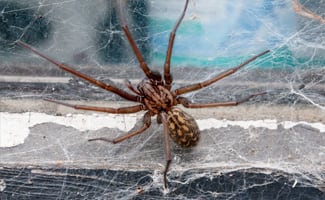
Even if your basement isn’t dank, dark, and depressing, it might still be hosting creepy crawly spiders. Flipping on a light and catching movement out of the corner of your eye or heading down the stairs and walking through a cobweb can be panic-inducing for a large part of the Boise area population.
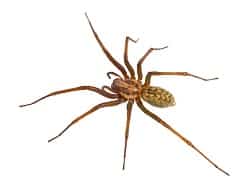
Unfortunately, Boise basements and crawl spaces are all too often “hot spots” for spiders. Black widows love the dark corners, while hobo and other common spiders thrive in the cool, low light conditions. So, let’s look at why spiders like Boise basements and what to do about it.
Why Spiders are Attracted to Basements and Crawl Spaces
The Perfect Spider Habitat
Spiders love the cool, dark, and humid conditions often found in basements and crawl spaces beneath Boise homes. Unlike the upstairs living conditions, basements are often undisturbed for long periods. With less foot traffic and vibrations, spiders have a safe place to thrive.
Moisture and Microclimates
Basements can create optimal living conditions for spiders. With Boise summers, the dry heat drives spiders inside toward the cooler, slightly damp zones that develop underground. In the colder months, spiders can overwinter in the safe, dark, damp of a crawl space or basement. Basements are often moisture-rich environments due to leaky pipes, condensation on HVAC systems, or poor ventilation, which leads to prime living conditions for spiders.
Abundant Food Sources for Spiders
Spiders often enter homes by following prey. Unfortunately, Boise basements can be a prime place for insects such as ants, silverfish, and beetles to congregate. So, spiders are soon to follow. While spiders can help to control other insect populations, you might not want them making a home in YOUR home. However, if you have lots of bugs in your house, you are likely to have spiders as well.
Easy Access Points for Spiders
Boise basements are often an easy access point into homes. Foundation cracks, gaps around utility lines, vents, and poorly sealed crawl spaces or exterior doors can all lead to bug infiltration. Bugs and spiders are quick to capitalize on entry points into your home.
Black Widows in Boise Basements and Crawl Spaces
Identifying Characteristics of Black Widows
- Create irregular, tangled webs in corners, around stored items, and near window sills
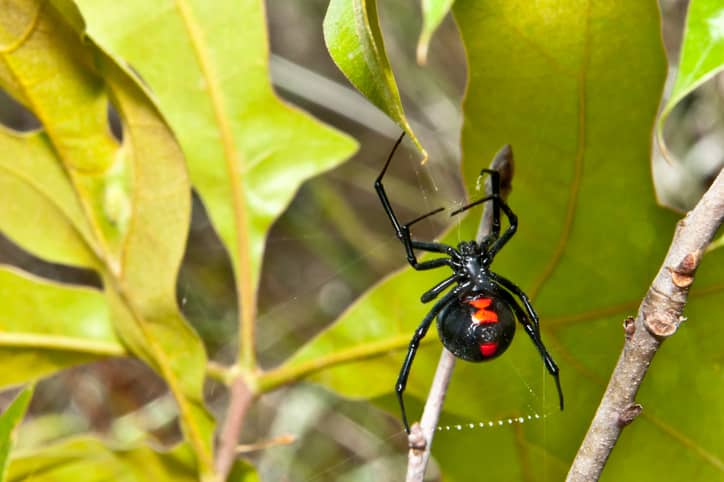
- Shiny, black body
- Round abdomen with a distinctive red hourglass shape on the underside of the females
Where Black Widows Like to Hide
Black widows prefer dark, cluttered spaces like basements or sheltered outdoor spaces
- Under stored boxes
- Along foundation walls
- In floor joists
- Firewood piles
- Under decks
- Around exterior vents
Risks and Medical Concerns
Black widows are venomous and care should be taken not to be bitten. The neurotoxic venom from a black widow can lead to intense pain, severe muscle cramps, hypertension, and vomiting.
Symptoms of a Black Widow Bite
- Latrodectism: intense, spreading muscle rigidity, particularly in the abdomen, chest, and back.
- Neuromuscular effects: severe cramping, spasms, tremors, and weakness.
- Autonomic dysfunction: high blood pressure, rapid heart rate, profuse sweating, and restlessness.
- Systemic symptoms: nausea, vomiting, headache, fever, and chills.
- Local Reaction: minor pain may begin at the site and progress to significant swelling, redness, and inflammation.
Seek Medical Attention
- If you experience severe pain, difficulty breathing, or extreme muscle cramping.
- If symptoms rapidly worsen, or you feel dizzy, faint, or lightheaded.
- If you notice red streaks, severe swelling, or pus at the site.
- If you are at higher risk, like the young, elderly, pets, or those with compromised immune systems
Treatment of Black Widow Bite
- Treatments typically include intravenous calcium gluconate, muscle relaxants, and pain medication. Antivenom is used only in the most severe cases because it can cause allergic reactions.
- Most individuals make a full recovery in 24-48 hours with prompt, proper treatment
- Initial first aid includes cleaning the area, applying ice to reduce pain, and seeking medical attention.
Hobo Spiders in Boise Basements and Crawl Spaces
Identifying Characteristics of Hobo Spiders
- Brown, fast-moving spider
- No distinct markings
- Create funnel or sheet webs with a tunnel retreat
- Webs are usually close to the ground
Why Hobo Spiders Love Crawl Spaces
- Hobo spiders prefer cool, moist, low-light environments.
- They like to be close to soil level.
- Their hunting strategy relies on a flat, quiet surface, so basement floors and tops of stored items are ideal.
Bite Concerns and Misconceptions
Hobo spiders are generally harmless. Despite their historic reputation, hobo spiders are not considered a significant health risk. Hobo spiders are not to be confused with brown recluse spiders, which are much more dangerous (and rarely found in Idaho).
Symptoms of a Hobo Spider Bite
- Bites from Hobo spiders are quite rare
- The bite site might develop a small, hardened, red area that could blister
- Localized pain
- Rare cases of an allergic reaction might include severe headaches, nausea, weakness, fatigue, and vision impairments
Seek Medical Attention
- If the bite site develops into a large, worsening ulcer or starts to blacken
- If you experience severe headache, dizziness, or vision changes
- If you experience other allergic reactions, such as difficulty breathing or swelling of face / mouth.
- If the bite site becomes infected and you experience inflammation, pain, or fever.
Other Common Basement Spiders in Boise
Typical “Nuisance” Species
In addition to black widow and hobo spiders, Boise basements are often home to a number of other nuisance spiders
- Cellar spiders (also known as daddy longlegs)
- House spiders
- Orb-weavers, found around windows
Most of these species are considered beneficial as they keep insect populations down and tend to mind their own business.
When “Normal” Spider Activity Becomes a Problem
Most homeowners might not even be aware of a few spiders here and there. Spiders become a problem when homeowners notice numerous webs, find spiders in living spaces, or experience recurring spider bites. When there is this much spider activity, homeowners should consider a professional inspection.
Preventing Spiders in Your Boise Home
Reduce Food and Moisture
Spiders and their prey are attracted to food and water sources. Control other insects and spiders by eliminating water leaks and condensation. Consider a dehumidifier in the most humid months. Enhance ventilation to reduce moisture.
Declutter and Clean
Reduce, reuse, and recycle old items. Store items in sealed plastic tubs rather than cardboard boxes. Regularly vacuum webs, corners, and behind stored items. Rotate or move long-term storage items occasionally.
Seal Entry Points
Make sure to caulk gaps in the foundation and around utility line entrances. Install or update door sweeps, repair weatherstripping, and inspect crawl space vents.
Call a Professional
If you think you have a spider infestation or just want the peace of mind that comes with professional pest management, contact Cascade Pest Control. You can benefit from a customized treatment plan and ongoing monitoring for Boise’s climate. Local technicians bring local knowledge and experience to treat pests safely in the Boise and Treasure Valley region.