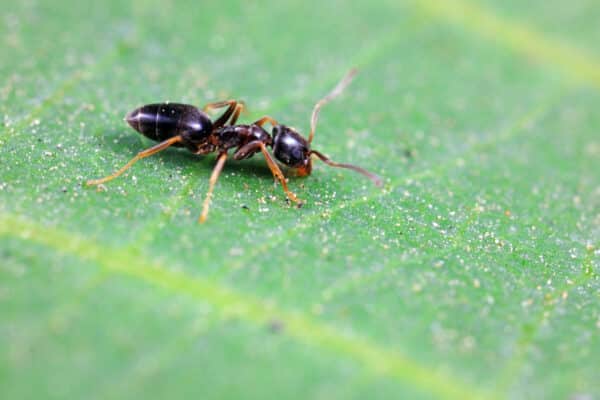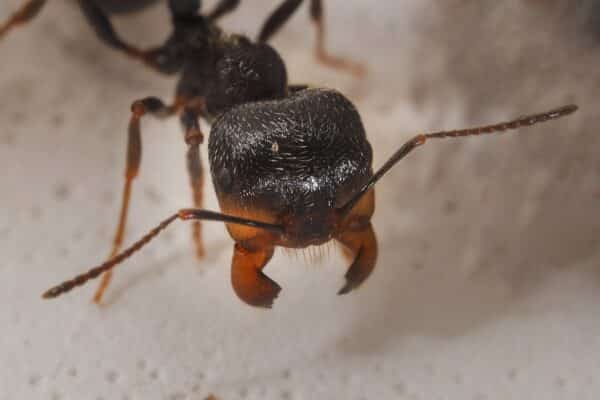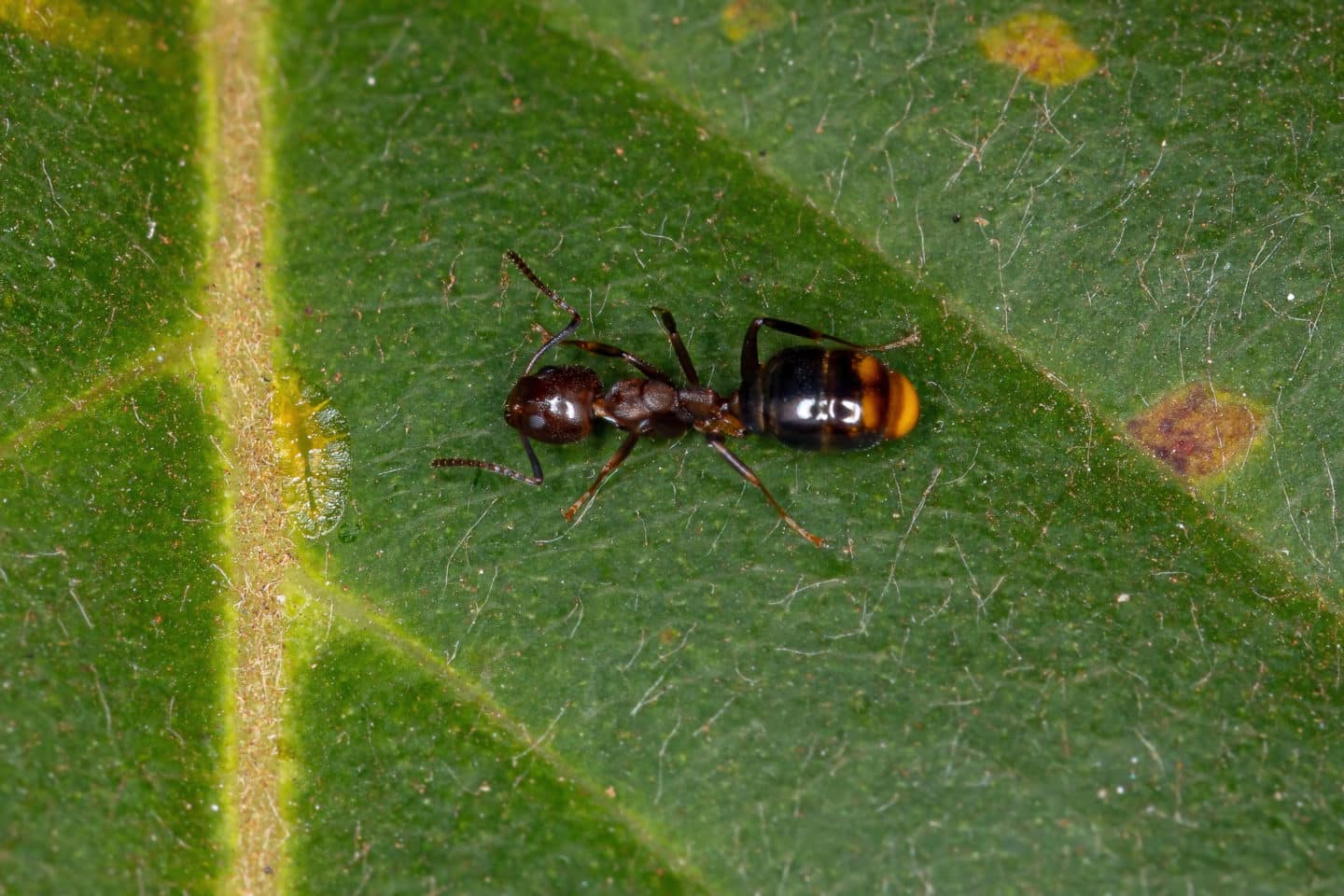
Odorous house ants – a.k.a. “sugar ants” or “tiny black ants” – are one of the most frustrating household pests. They form large, resilient colonies, show up in high numbers, and often seem to come back no matter what you try.
Odorous House (Sugar) Ants within Electrical Switch Box
Why Odorous House Ants Keep Coming Back
Odorous house ants (Tapinoma sessile) are persistent for a few key reasons:
- They form very large colonies, often with thousands of workers.
- Colonies commonly have multiple, egg-producing queens (a trait called polygyny), which allows rapid growth and recovery.
- They “bud” to create new nests, meaning a single colony can split into many interconnected nesting sites.
- Live easily in close association with humans
- Have a varied diet and nesting habitats so they are quick to adapt to change
This is why DIY sprays often fail. Killing visible ants doesn’t eliminate the colony – and can sometimes make the infestation worse by causing the colony to fragment and spread. Rather like the mythical Hydra – you cut off one head, and it is replaced by multiple ones.
Ants Nest Inside Walls and Electrical Boxes
One of the more surprising (and unsettling) behaviors is where these ants choose to live.
Odorous house ants frequently nest in and around homes:
- Under rocks, lawn ornaments, wood piles, pavers, mulch / leaf litter
- Inside wall voids and around insulation
- Near bath tubs, toilets, sinks, pipes, condensation, leaks
- Inside or around electrical boxes and outlets
Electrical boxes provide:
- Shelter from the elements
- Warmth (especially near active wiring)
- Easy access to wall cavities
In this YouTube video, you can see ants actively nesting inside a switch box – demonstrating just how close these infestations can get to everyday living spaces.
Odorous House Ants Use Wiring and Plumbing as Highways
Ants don’t eat wires, but they absolutely use them.
Electrical wiring, conduit paths, and plumbing lines act like “road systems” inside your home. These pathways allow ants to move efficiently between:
- Nesting sites (from the multiple colonies that they develop)
- Food sources, like kitchens and pantries
- Moisture zones (bathrooms, utility areas)
This behavior isn’t unique to odorous house ants. Carpenter ants and other species also use structural pathways to spread throughout a building.

Identifying Odorous House Ants
So how do you know odorous house ants are the culprit? A few identifying and behavioral traits to know:
- Small size (about 1/16-⅛ inch)
- Dark brown to black color
- Emit a “rotten coconut “odor when crushed (which gives them the odorous name)
- Strong attraction to sweet foods (hence “sugar ants” nickname)
- They don’t sting or bite
- Prefer indoor nesting during cooler or wet conditions (earning the “house” part of their name)
These characteristics help distinguish them from other small ant species.
Why Professional Treatment Matters
Homeowners may become frustrated with DIY options with these ants. Because of their multi-nest, multi-queen structure, odorous house ants are rarely controlled with surface sprays alone.
Professional ant control options typically include:
- Using non-repellent baits (attractants) that workers carry back to the colony
- Targeting multiple nesting sites (not just visible activity)
- Focusing treatment in wall voids and structural pathways
- Identifying and addressing moisture sources
Improper treatment can cause colonies to split (budding), leading to larger and more widespread infestations.
Need Help with Sugar Ants?
Cascade Pest Control specializes in identifying and eliminating odorous house ant infestations. With years of experience treating complex, multi-nest colonies, we know how to target the source – not just the symptoms.
If you’re seeing ants in outlets, walls, or multiple areas of your home, it’s time to take a more strategic approach.