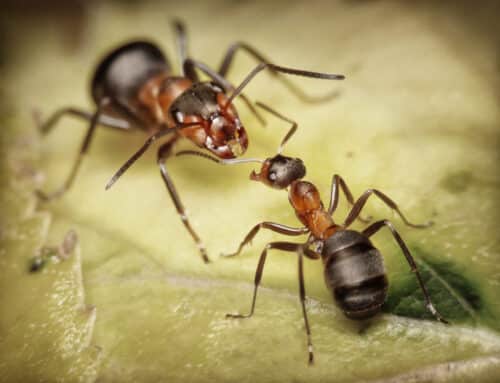
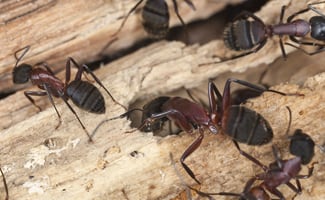
As homeowners move into their newly constructed homes, the last thing that they want at their housewarming party is ants. Unfortunately, it is an all-too-common occurrence for ants to be found trailing along baseboards, patios, and kitchen counters within the first year of newly built homes.
In this post we dive into the why and where, ant species types and how to manage and prevent ant infestations in new home construction.
Why New Boise Subdivisions Are a Magnet for Ants

Rapid Growth and Changing Landscapes
- New subdivision construction disturbs established habitats and causes ants to find new homes. Replacing fields, pastures, and sagebrush with compact lots, driveways, and foundations forces ants to relocate or adapt.
- Ants are highly adaptable, and the ones in the Boise area are quick to thrive in urban or semi-urban settings around concrete, foundations, and irrigated landscaping.
Disturbed Soil, Grading, and Utility Trenches
- Much of the activity around construction can cause increased ant activity. Grading, trenching for utilities, and heavy equipment break up established colonies and create loose, aerated soil that is ideal for new nesting sites.
- Digging for foundations, expansion joints, slab edges, and gaps for utilities become “ant superhighways” allowing these insects to travel from soil nests into interior spaces.
Irrigation, Sod, and Mulch Beds
- Humans are a huge attraction for ants. New lawns, drip lines, and mulch beds provide moisture and shelter in the otherwise semi-arid Boise climate. They encourage ants to nest along foundation lines and hardscapes.
- Disturbed soil + steady water = perfect conditions for pavement ants, odorous house ants, and other moisture-loving species around new builds.
Common Ant Species in Boise’s New Subdivisions
| Ant Species | Where ants nest in subdivisions | Why ants show up in new builds |
| Odorous House | Wall voids, under sinks, near foundations, mulch beds | Attracted to sweets and moisture, disturbed soil and new landscaping push them toward homes. |
| Pavement | Under sidewalks, driveways, patios, and along foundations | Thrive in disturbed soil and along concrete; construction joints and cracks lead them indoors. |
| Carpenter | Moist wood, structural voids, landscaping timbers | Take advantage of wet or damaged wood around new builds and decks; can cause structural damage over time. |
| Argentine / little black | Soil, under stones, along irrigation lines and edges | Highly invasive, form large colonies that spread through new, irrigated neighborhoods. |
| Harvester / yard | Open sunny areas, lawns, and bare soil mounds | Colonies displaced by grading re-establish in new lawns, play areas, and common spaces. |
What Makes These Ants “Invasive” in Boise Subdivisions
- Homeowner Invasive: All ants can be considered invasive if they breach the home’s barrier. Any ant species that spreads aggressively, forms large colonies, and easily exploits human-made environments can be considered an invader of homeowners’ spaces.
- Non-native Invasive: Ant species that are not native to the environment are also considered invasive. These species are often particularly troublesome because they can grow unchecked from natural predators and displace native ant species that may benefit the environment.
Signs of Ant Infestations in New Boise Homes
Early Warning Signs of Ants Outdoors
- Look for small mounts along sidewalks, driveways, and patio edges. Watch for ants trailing along foundation walls and irrigation lines.
- Check for ant activity near a/c pads, hose bibs, and where utility lines enter the structure.
Indoor Ant Red Flags in the First 1-2 Years
- Lines of worker ants along baseboards, window sills, or emerging from electrical outlets and plumbing penetrations can signal a problem.
- Recurrent ant presence in kitchens, pantries, and bathrooms, especially when food is put away, and surfaces are clean, can indicate an infestation.
Prevention Strategies for Treasure Valley Homeowners in New Builds
Construction and Move-In Checklist
- Ask the builder about any pest-prevention pre-treatments. Inspect the home for visible gaps where utility lines enter, then seal them with appropriate materials.
- Avoid piling construction debris, firewood, or cardboard against the home; remove temporary boards and materials promptly.
Exterior Habitat Management Around a New Home
- Maintain a “dry buffer” around the home by pulling mulch and soil several inches back from the foundation and ensuring proper drainage. Consider a stone or rock perimeter around the home.
- Adjust irrigation schedules to avoid constantly soggy soil, especially near foundations, sidewalks, and patios.
Indoor Sanitation and Exclusion
- Practice consistent food management. Wipe up crumbs quickly, sweep frequently, store sweets and pet food in sealed containers, and address moisture issues under sinks immediately.
- Use calk and weatherstripping to close small gaps around doors, windows, and baseboards where ants commonly trail. Keep screens and sweeps in good repair.
In the growing Boise / Treasure Valley area, new homeowners might need to take a proactive approach to pest management. Call Cascade today to set up professional help to keep ants away.