Here’s What Homeowners Need to Know
Are there scorpions in the Boise area? Yes, the southern Idaho high desert is home to a few species. So, homeowners near the foothills or desert-edge might run into the critters with the distinctive curled tail in and around their homes. But take a few deep breaths if you are tempted to panic. Boise scorpions are not like the ones found in the southwestern US, such as the Arizona Bark scorpions.
Which Scorpions Live in and Around Boise?
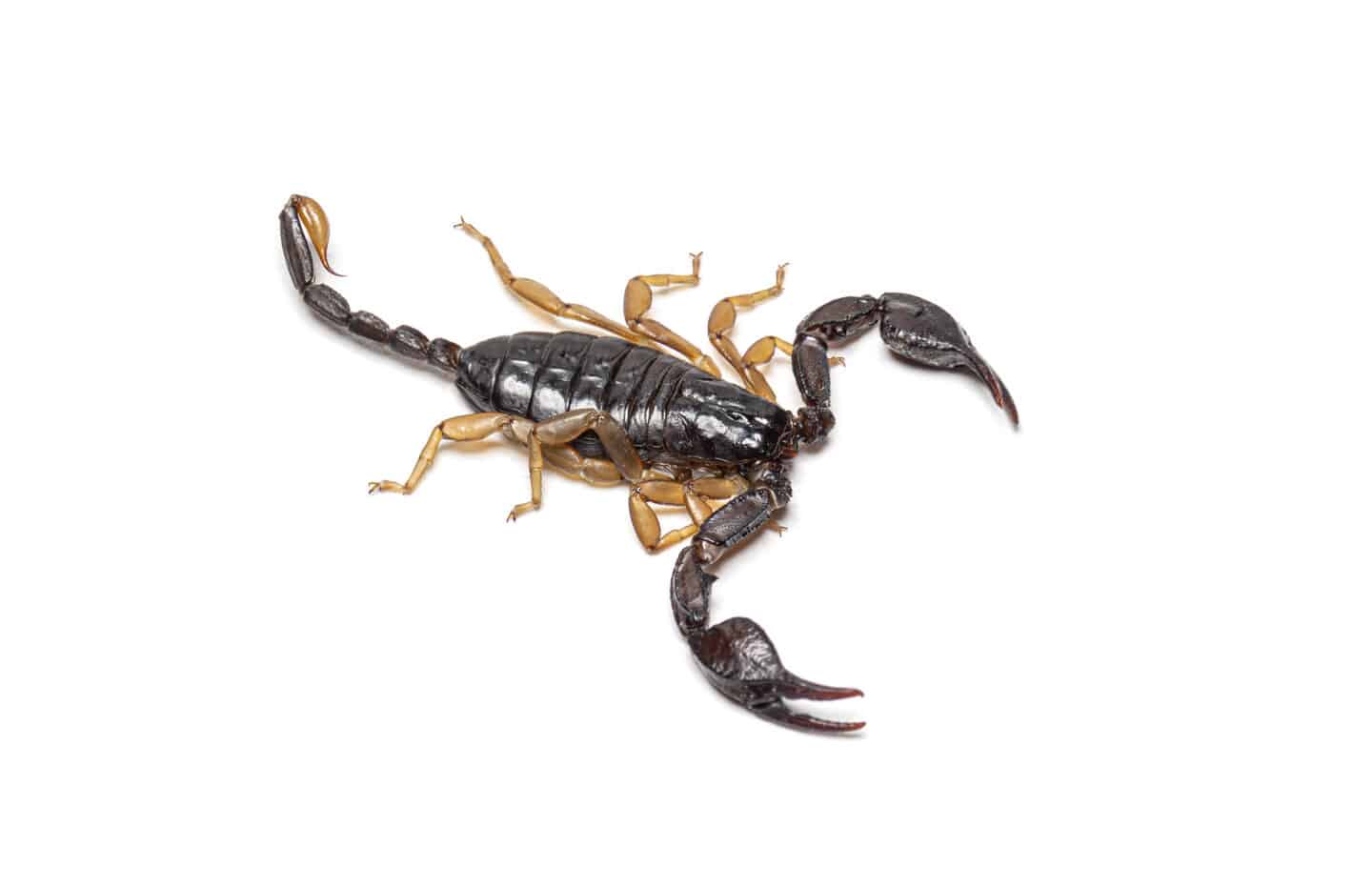
Idaho has one native scorpion species, mostly concentrated in the southern deserts and Snake River Plain. Boise and neighboring Treasure Valley cities sit on the northern edge of that habitat, so while it isn’t impossible to encounter a scorpion, they also aren’t overrun with them. Many people live their whole lives in the area without laying eyes on one.
Northern Scorpion (Paruroctonus boreus):
- Widespread in southern Idaho
- 1-2.5 inches, tan to brown in coloring
- Most active from late spring through early fall, they emerge at night to hunt and retreat during the day.
- Adapted to sagebrush and rocky areas below roughly 4,000-5,000 feet of elevation.
- Not found in all subdivisions, mostly associated with rocky, arid edges rather than dense urban cores. When they adapt to human structures, they typically seek shelter in foundation cracks, woodpiles, or beneath loose bark.
Other Scorpion Species
- Forest Scorpion: smaller than the Northern scorpion, black in color, found in moister, wooded regions of central and northern Idaho’s mountainous terrain.
- Burrowing: Small, under 3 inches, light-buff to yellow in color, found primarily in the arid, sandy southwestern corner of the state.
- Black-Back: larger than the others, at almost 5 inches, with a dark back and lighter brown or yellowish legs and pedipalps; they prefer sandy soils and arid environments in the southwest corner of Idaho.
- Yellow Ground (Parabaejovis confusus): Small, typically under 3 inches, light-buff to yellow-colored with bulky tails; they also tend to inhabit the sandy, arid, southwest corner of the state and can be found under surface objects as they don’t burrow as deep as other species.
The scorpions found in Idaho have developed distinctive traits that help them survive.
- Adapted to survive cold temperatures by burrowing deep underground in the winter months.
- At just 2-3 inches long, they are relatively small compared to other North American species.
- Their exoskeleton contains fluorescent chemicals that glow under UV light, making them easier to spot at night. They glow a distinctive blue-green color.
- Their flattened bodies allow them to squeeze into narrow crevices.
- Extra-sensitive hairs can detect subtle vibrations from prey or predators.
Are Boise Scorpions Dangerous?
- Behavior: Scorpions are shy, nocturnal predators that prefer to hide under rocks, logs, and debris. They are not usually active in the winter and are most likely encountered in the summer months. They sting only when threatened: accidentally stepped on, rolled on, or trapped in shoes or clothing.
- Sting Severity: For most healthy adults, Idaho scorpion stings are comparable to a bee sting – painful, localized, and short-lived, but not life-threatening. Unlike lethal scorpions in other parts of the world, like North Africa, India, or the Middle East, Boise scorpions are generally not a threat to humans.
- Exceptions: Sting should be taken seriously, however, with certain populations. Young children, the elderly, and people with allergies or compromised immune systems should be medically evaluated if stung.
Foothill and Desert-Edge Hot Spots
Most scorpions aren’t coming to humans; humans are coming to them. As newer subdivisions are built that abut the Boise foothills, the Snake River desert, or open sagebrush areas, homeowners tend to see more scorpion activity than in older, fully built-out neighborhoods.
Microhabitats Attract Scorpions
- Rock outcrops, retaining walls, and riprap along lots
- Woodpiles, stacked landscape rock, concrete rubble, railroad ties, and debris piles
- South- and west-facing slopes with sparse vegetation, where the soil stays warm and dry.
Construction often disturbs native habitat and prey, driving scorpions to seek shelter in and under new structures at the desert edge. However, scorpions aren’t likely to “infest” a home. Homeowners might have scorpions in the backyard or garage, but scorpions are less likely to be inside the home.
Scorpion Myth-Busting: Boise Edition
Myth 1: There are no scorpions in Idaho
- Reality: Idaho has multiple scorpion species, with most in the southern deserts and scattered populations around the Snake River Plain, including areas near Boise.
Myth 2: If you see one scorpion, your house is infested
- Reality: Scorpions, like their spider cousins, tend to be solitary. Seeing one in your yyard or garage doesn’t automatically mean a large indoor infestation, though it does signal local habitat is attractive to them.
Myth 3: Idaho scorpions are dangerous, like Arizona bark scorpions
- Reality: Idaho scorpions deliver a mild to moderate sting in most cases. The Arizona bark scorpion is NOT found in Idaho. The scorpions in the Sonoran Desert have a much more potent sting, but their range is limited to the southwestern US.
Myth 4: Scorpions hunt people and pets
- Reality: Scorpions are hunters, but their prey is insects and other small arthropods, NOT humans or pets. They tend to avoid light and vibration (common with human interactions), so they aren’t likely to be in contact with humans. They will generally only sting when trapped or surprised.
Myth 5: There is nothing you can do to prevent scorpions
- Reality: Habitat reductions, sealing entry points, and targeted treatments around the foundation and key harborages can significantly reduce encounters in foothill neighborhoods.
Practical Prevention for Boise Homeowners
Exterior Habitat Cleanup
- Remove or neatly stack firewood AWAY from the house; avoid storing lumber, pavers, and unused building material right against the foundation. Use gloves and be aware when moving items that have been sitting for some time.
- Thin out rock mulch directly against the home, and avoid creating “rock and rubble” strips that mimic natural scorpion habitats.
- Clear yard debris, old boards, and junk piles that provide daytime hiding spots
Foundation and Structure Sealing
- Seal cracks and gaps in the foundation, siding transitions, or utility penetrations; even small gaps can admit scorpions
- Install or repair door sweeps on exterior doors and garages. Make sure that window screens are intact.
- For homes backing onto open desert or foothills, consider fine-mesh screening on weep holes and other small openings while preserving ventilation.
Yard and Lighting Adjustments
- Reduce clutter near property edges where your landscaping blends into native brush or sage, especially in foothill lots.
- Use yellow “bug lights” or motion-activated lighting to reduce insect attraction near doors and patios, which lowers food availability for scorpions.
Smart Habits in Scorpion Country
- Shake out shoes, gloves, and outdoor gear kept in garages, sheds, and on patios before use, particularly in foothill or desert-edge neighborhoods.
- Avoid walking barefoot in garages, on patios, or in rock beds, especially at night. Use closed-toe shoes and a flashlight when walking outdoors at night.
- If you enjoy blacklight “critter walks” in the foothills, keep it hands-off. Look, don’t touch.
Professional Prevention and Treatment
- If you are concerned about scorpions on your property, consult a professional, like Cascade Pest Control. They can inspect rock walls, foundation gaps, and year edges. They can apply targeted treatments to common harborages and set up a prevention schedule tailored to your local, Boise, high-desert climate.
- While scorpions aren’t a high-pressure pest, they are a concern, especially during the summer season. Let Cascade help you keep them outside – where they belong.