Introduction: Meet the Harvester Ant
Harvester ants are a species of ant known for their industrious nature, collecting and storing seeds, hence their moniker “harvester”.
Harvester ants are found worldwide, particularly in dry and semi-arid regions where these ants play a vital ecological role in soil health and plant growth.
However, when harvester ants form colonies too close to homes, gardens, and play areas, they can become a nuisance. Understanding their behavior, nesting habits, and potential risks can help homeowners know when to call on professionals for ant control.
Identifying Harvester Ants
Physical appearance
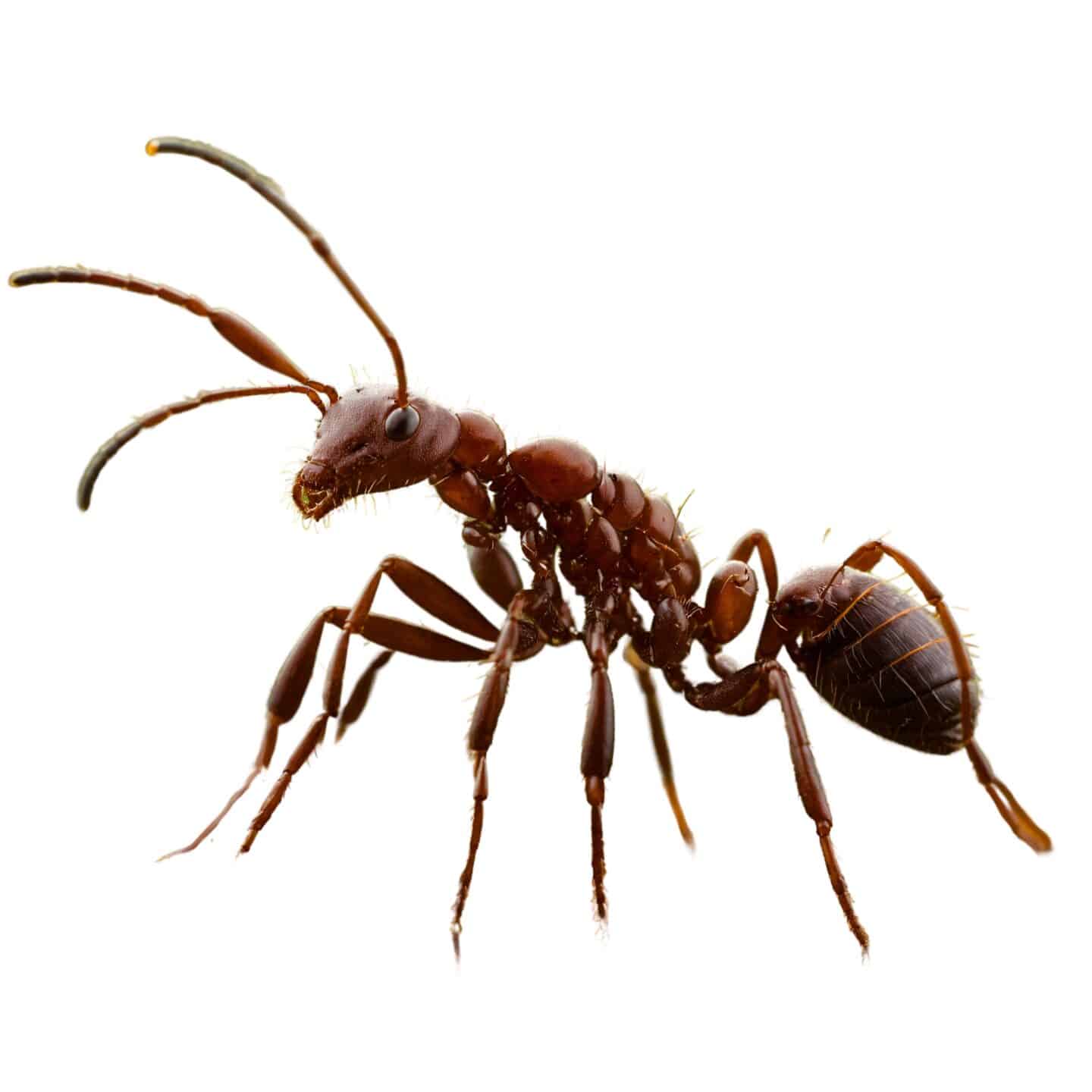
- Harvest ants are typically medium to large (about ¼-½ inch long)
- Appear red, brown, or black depending on the species of harvester ant
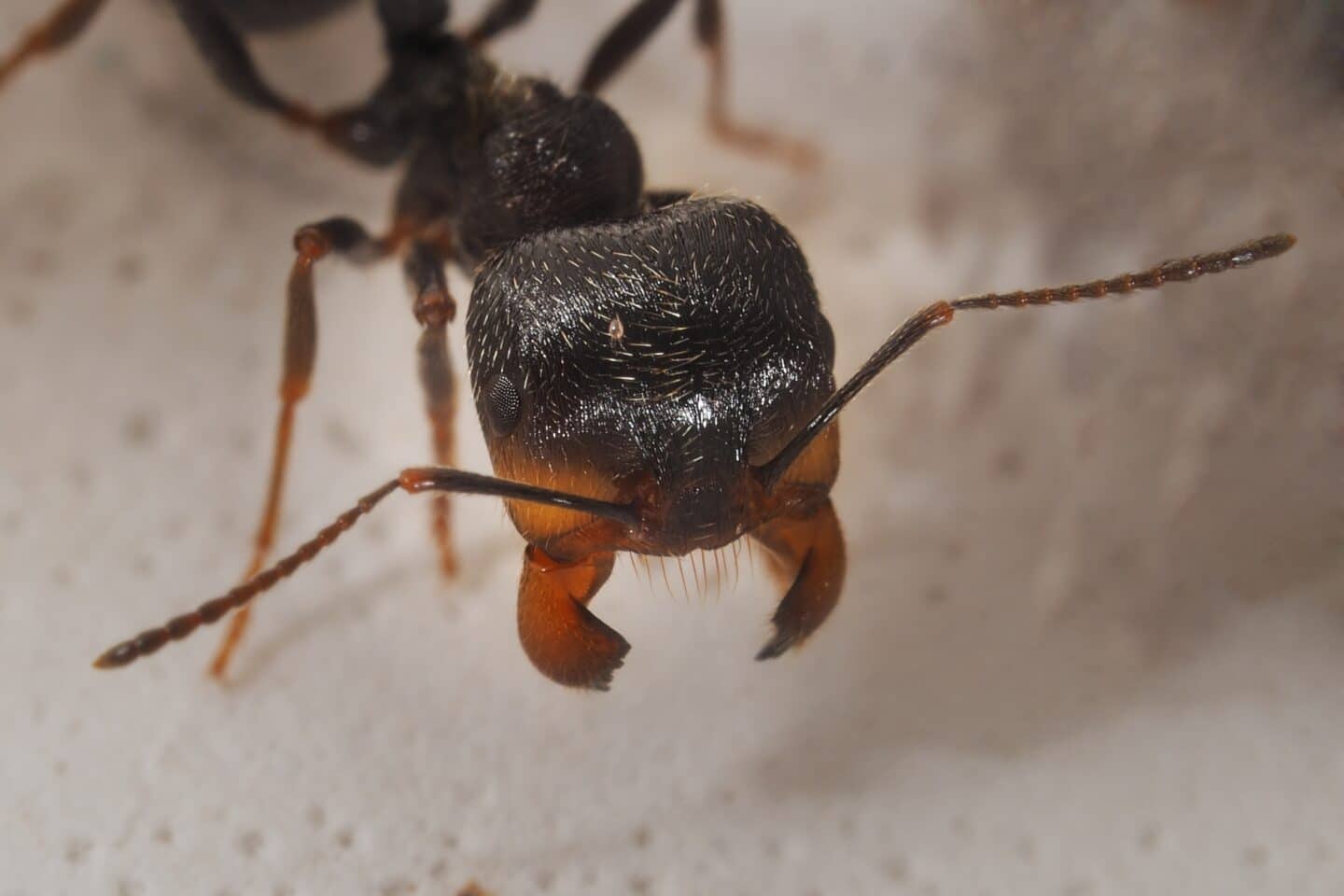
- Large head and powerful jaws used for cutting vegetation and carrying seeds
Behavioral clues
- Form seed piles: these industrious insects create seed piles in lawns
- Clear spots of vegetation: you might also find smooth, bare circles of soil around their nests
- Visible nests: they create visible nests in lawns and fields
Identifying traits
Certain species of harvester ants can be mistaken for fire ants. Unlike fire ants, harvester ants move more deliberately and are less aggressive, unless disturbed.
Typical Habitats and Nesting Behavior
- Harvester ants thrive in open, sunny areas with dry or sandy soil
- They prefer places like fields, prairies, and lawns where the ground stays warm and firm.
- Harvester ant nests are easily recognizable – large mounds with clear patches of bare earth around them.
- Workers continuously remove plant debris to maintain the nest’s ventilation and structure
TIP: If you notice numerous ants carrying seeds in and out of the same area, you’ve likely found a harvester ant nest.
Are Harvester Ants Dangerous?
Harvest ants pose minimal danger unless threatened or handled.
- While harvester ants are not typically aggressive, their sting can be painful. Most species deliver a sharp burn that lingers for a few minutes, although individuals with allergies may experience a more severe reaction.
- Care should be taken when pets or children are near harvester ants, as they might accidentally provoke them. Keep your children and pets at a safe distance.
- These ants generally mind their own business, so avoid disturbing them
Role of Harvester Ants in the Environment
Beyond their reputation as pests, harvester ants do perform a valuable service for the ecosystem.
- By collecting seeds, they help disperse native plants and promote vegetative diversity.
- By digging nests, they aerate the soil, improve water infiltration, and circulate nutrients that benefit plant roots.
- In a balanced environment, a healthy ant population signals good soil fertility and ecological function.
Signs of Harvester Ant Activity Around Your Home
Recognizing the signs of harvester ants can prevent full-scale infestations.
- Clean soil patches: Look for cleared patches in perfect circles around mounds
- Seed piles or husks: Note remains of stored or discarded seeds near the nest
- Constant activity: Observe steady streams of ants entering or exiting a central opening
How to Manage or Control Harvester Ants
When management becomes necessary, both natural and chemical strategies are available. Avoid aggressive chemical use in lawns, yards, and gardens to protect pollinators and soil health.
- Non-chemical approaches: These include disturbing small mounds manually, applying diatomaceous earth around nest openings, or watering dry soil to make conditions less favorable. (However, all of these also have downsides – possible stinging by disturbed harvester ants, excessive watering leading to other pest issues.)
- Preventive maintenance: Seal cracks in foundations, store seed or pet food securely, and rake out problem mounds before they expand.
- Professional intervention: For large or repeatedly active ant colonies, the professional technicians at Cascade Pest Control can target deep nest chambers safely and set up a treatment plan that works for you.
For harvest ant control, call Cascade Pest Control!