Ants in your lawn or patio can be frustrating. But ants marching across your kitchen counter? That is something else entirely.
When ants start to show up indoors, many homeowners understandably want a quick, environmentally friendly, non-toxic, low-odor solution. That is why cinnamon is often suggested as a natural ant remedy. But does cinnamon actually work?
The short answer: cinnamon may temporarily deter ants or interrupt a visible ant trail, but it is not a reliable way to eliminate an ant infestation.
Why Cinnamon May Seem to Work to Control Ants
Ants are biologically wired to rely heavily on scent. These chemical signals, called pheromones, are used to communicate and mark trails between ants’ nests and food / water sources. Strong-smelling materials can interfere with those trails temporarily.
Cinnamon contains aromatic compounds, including cinnamaldehyde, that repel some ants or at least make the treated path less appealing. Sprinkling cinnamon near an ant trail or wiping a surface with a cinnamon-containing solution may cause ants to slow down, scatter, or reroute.
That temporary change can make it appeal as though the problem is solved.
Usually, it is not.
The ants have simply been redirected. If the colony still has access to food, water, and entry points into the home, workers may establish a new trail nearby – or return after the cinnamon scent fades.
Research suggests cinnamon extracts and oils can affect certain ants, but ordinary household cinnamon is not a dependable method for reaching and eliminating an established colony. So the problem persists.

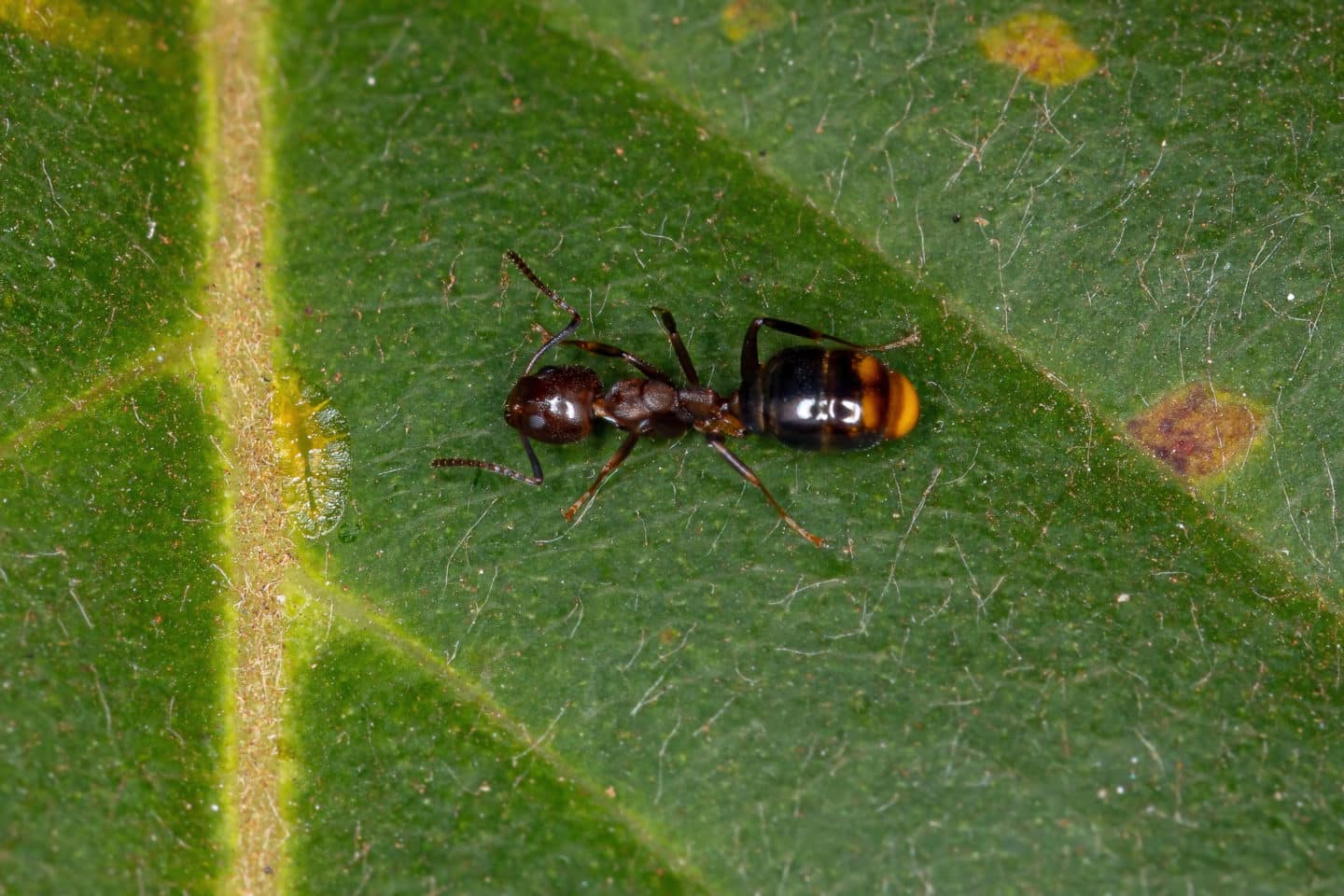

What Kind of Ants Are in Your Kitchen?
Several ant species are likely to invade homes. One frequent indoor nuisance is the odorous house ant, Tapinoma sessile. These small, brown-to-black ants can form noticeable trails and are commonly attracted to sweet foods, moisture, and food residue.
Odorous house ants are sometimes called sugar ants, stink ants, or coconut ants. The name “odorous house ant” comes from the distinctive smell produced when the ants are crushed – it has been described as similar to rotten coconut. Because “sugar ant” is a loose, regional term used for more than one species, proper identification matters when choosing a treatment plan.
Different species have different nesting habits, food preferences, and colony structures. What works for one kind of ant may not work well for another. DIY options can lead to more problems if not implemented for the correct species.
Why Repelling Ants is Not the Same as Controlling Them
Seeing ants in the kitchen does not necessarily mean the nest is in the kitchen. Worker ants may be exploring from an outdoor nest, a wall void, a foundation crack, beneath the floor, or in another protected area as they search for a food or moisture source.
Cinnamon may disrupt the worker ants you see, but it does not reliably reach the queen, brood, or nest sites that support the colony. Stopping a worker or two does not meaningfully impact the colony.
A more effective approach focuses on the entire problem:
- Remove crumbs, grease, spills, pet-food residue, and other food sources
- Store food in clean, tightly sealed containers
- Repair leaks and reduce moisture around sinks, dishwashers, plumbing penetrations, and exterior foundations.
- Wipe visible trails with soapy water or a household cleaner to remove pheromone trails
- Inspect for entry points around windows, doors, utility lines, siding, and the foundation, then seal accessible gaps.
- Use appropriately labeled ant bait products when treatment is needed, allowing foraging workers to carry the bait back to the colony
- Avoid relying on random indoor spray applications, which may kill a few visible workers while leaving the colony active
Baits are often an important part of ant management because foraging worker ants can carry them back to nestmates. They are not instant, however. Depending on the ant species and bait product, it can take several days before homeowners see results.
Be Careful With Spray-and-Repel Approaches
Some ant species live in large, multi-queen colonies or use multiple nesting sites. In those situations, simply repelling the ants – or treating only the trail you can see – may move the ants’ activity from one area to another rather than resolving it.
This is especially important with species that can establish satellite nests or expand through colony “budding”. That does not mean every ant colony will split after a spray treatment, but it is one reason species identification and a colony-focused treatment plan matter. Pharaoh ants, for example, are well known for budding behavior and are generally managed with baits rather than repellent sprays.
The Bottom Line on Cinnamon for Ant Control
Cinnamon is best viewed as a short-term trail deterrent, not an ant control solution.
If you want to use cinnamon, it may help temporarily discourage ants in a small, localized area. But do not expect it to eliminate the colony or prevent ants from finding another route into your home. For recurring, widespread, or persistent ant activity, an integrated pest management plan is the more effective choice.
Tired of ants finding their way into your kitchen? Cascade Pest Control can identify the ant species, locate likely nesting and entry areas, and build a treatment plan designed to address the colony – not just the ants currently on the counter. Contact us today to schedule ant control and take back your home.